An American Inheritance: Are Museums The Right Place For These? / Impact Today
Share
Explore Our Galleries


Breaking News!
Today's news and culture by Black and other reporters in the Black and mainstream media.
Ways to Support ABHM?
What Do We Do With These Objects Today?
“Just put it in a museum” is a common response when people are asked what should be done with racist artifacts from the past. Many people who donated the artifacts in this exhibit described their own internal debates about what to do with things they inherited from their families. When they considered throwing the objects away, they felt they wouldbe denying future generations the chance to learn from them. When they considered keeping them, they felt shame. Selling them felt even more shameful.
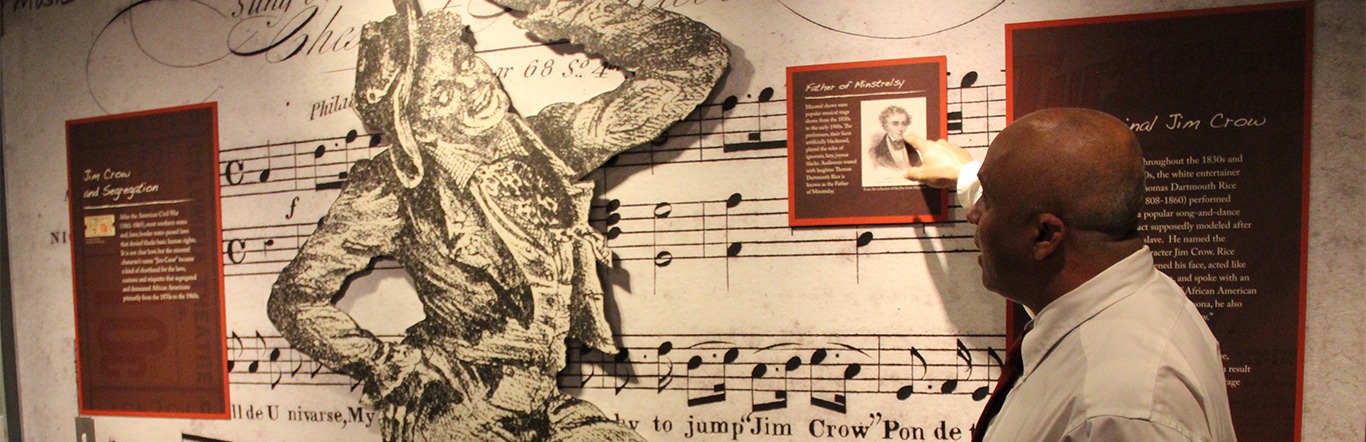
A video in this exhibit shows a recent controversy involving these artifacts. They were discovered for sale at Antiques on Pierce by a private seller. Today, they are in the ABHM collection and some are displayed in this exhibit with the historical context the community called for during the protests.
A museum may seem like the logical place for these objects. However, museums often do not have the funding or space to maintain large collections of racist memorabilia. The Jim Crow Museum of Racist Memorabilia was created in part to address questions about what should be done with these artifacts. As of 2026, the museum has stopped collecting because it does not have enough storage space. It has received an overwhelming number of donated artifacts since opening and needs to expand before it can continue collecting.
While WBHSM and ABHM collected objects for this exhibit, we realistically do not have the staff or space to continue collecting and caring for all of the racist artifact donation requests we receive.
So, what should we do with these artifacts as a society?
Let us know what you think!

Impact Today
These artifacts have moved to some people’s attics, basements, garbage cans or have been given to museums or antique stores. Although they are considerably less often displayed proudly in homes or shared widely through postcards and advertisements, the images and ideas described in this exhibit continue to have an impact today.
Negative biases held by people in positions of power who grew up surrounded by these images can affect policy decisions. The way Black people are treated and discussed in the media has also been shaped by this long and still active history of stereotyping.
AS LAURA GREEN OF VIRGINIA COMMONWEALTH UNIVERSITY STATES:
“We have made enormous progress since the days of slavery and the stereotypes that supported it. Yet it seems that many people are unaware of the remaining stereotypes, negative attitudes, and oppression of African Americans. Because stereotypes are often accepted as the truth, defining the problem is a crucial step of intervention.”
As we decide what society should do with these artifacts, it is important to understand why they were created and why they are still found in so many places. We must also work to remove these stereotypes from our own ways of thinking.
The ultimate goal is to examine our own biases and prejudices by directly confronting them. Instead of continuing to hide them in ourselves and in our basements or passing them on to our children, we must work to understand and challenge the ideas they represent.
Click for more An American Inheritance exhibits:
Welcome to gallery - An American Inheritance | The Story of Racist Memorabilia in WI & the US
Introducing / Unpacking Stereotypes
Click for more An American Inheritance exhibits:
Welcome to gallery - An American Inheritance | The Story of Racist Memorabilia in WI & the US
Introducing / Unpacking Stereotypes
Comments Are Welcome
Note: We moderate submissions in order to create a space for meaningful dialogue, a space where museum visitors – adults and youth –– can exchange informed, thoughtful, and relevant comments that add value to our exhibits.
Racial slurs, personal attacks, obscenity, profanity, and SHOUTING do not meet the above standard. Such comments are posted in the exhibit Hateful Speech. Commercial promotions, impersonations, and incoherent comments likewise fail to meet our goals, so will not be posted. Submissions longer than 120 words will be shortened.
See our full Comments Policy here.