An American Inheritance: Jim Crow Era
Share
Explore Our Galleries


Breaking News!
Today's news and culture by Black and other reporters in the Black and mainstream media.
Ways to Support ABHM?
Ku Klux Klan (KKK) wearing iconic masks and white robes parading down King Street in Madison, WI. WHI 1902
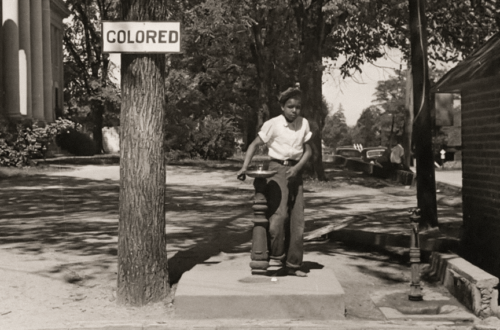 Many of the images in this exhibit were created to marginalize the new hard-won freedoms of African Americans at that time.
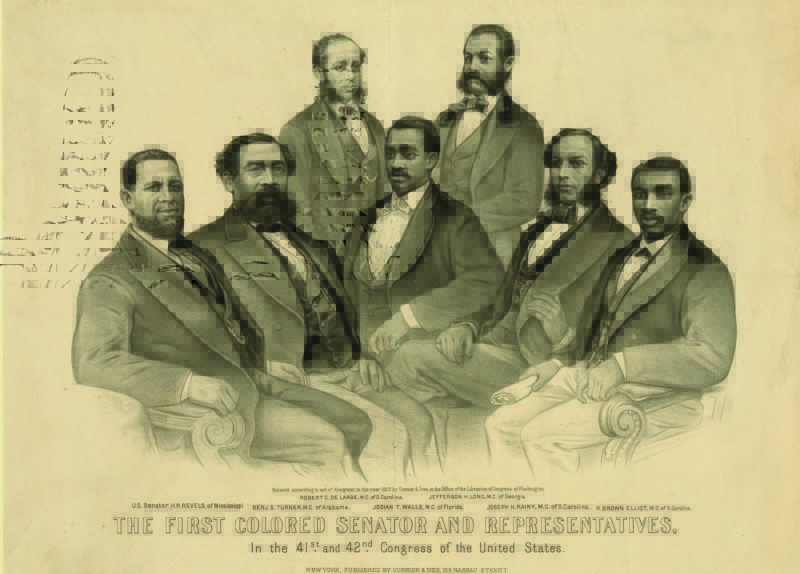
During Reconstruction, the period after the Civil War, Black people reunited with their families, looked for jobs, built and attended schools, and Black men exercised their right to vote and hold public office.
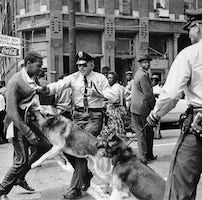
The Jim Crow era that followed Reconstruction was a violent backlash against Black people’s pursuit of freedom and citizenship. This era included the return of the Ku Klux Klan, lynchings, the burning of homes and businesses, attacks on those who tried to vote, and many other forms of racial violence.
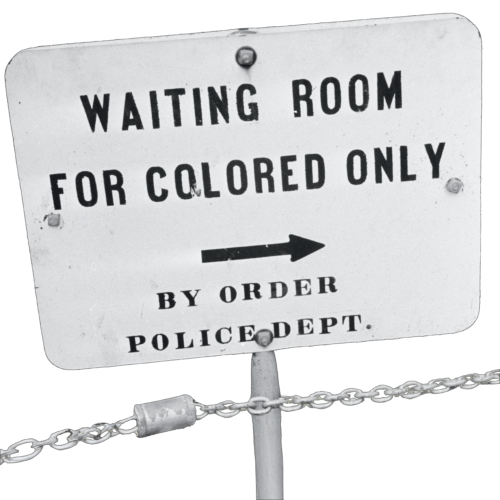
The images and stereotypes in this exhibit were used to justify this violence. Racists portrayed African Americans as subservient, dangerous, promiscuous, unintelligent, and less than human. These images appeared on everyday objects and helped create a story and culture that supported white supremacy. When white people bought and displayed these artifacts in their homes and daily lives, they helped spread and support these stereotypes.

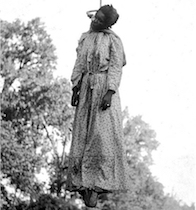
This photograph of the 1930 mob lynching of Thomas Shipp
and Abram Smith in Marion, Indiana. This is the lynching
Dr. James Cameron survived.
AS HENRY LOUIS GATES, JR. WRITES, THESE IMAGES WERE:
“Intended to naturalize the image of the black person as sub-human and in doing so justify and subliminally reinforce the perverted logic of the separate and unequal system of Jim Crow itself.”
AS HENRY LOUIS GATES, JR. WRITES, THESE IMAGES WERE:
“Intended to naturalize the image of the black person as sub-human and in doing so justify and subliminally reinforce the perverted logic of the separate and unequal system of Jim Crow itself.”
Click for more An American Inheritance exhibits:
Welcome to gallery - An American Inheritance | The Story of Racist Memorabilia in WI & the US
Introducing / Unpacking Stereotypes
Click for more An American Inheritance exhibits:
Welcome to gallery - An American Inheritance | The Story of Racist Memorabilia in WI & the US
Introducing / Unpacking Stereotypes
Comments Are Welcome
Note: We moderate submissions in order to create a space for meaningful dialogue, a space where museum visitors – adults and youth –– can exchange informed, thoughtful, and relevant comments that add value to our exhibits.
Racial slurs, personal attacks, obscenity, profanity, and SHOUTING do not meet the above standard. Such comments are posted in the exhibit Hateful Speech. Commercial promotions, impersonations, and incoherent comments likewise fail to meet our goals, so will not be posted. Submissions longer than 120 words will be shortened.
See our full Comments Policy here.