An American Inheritance: Games / Media
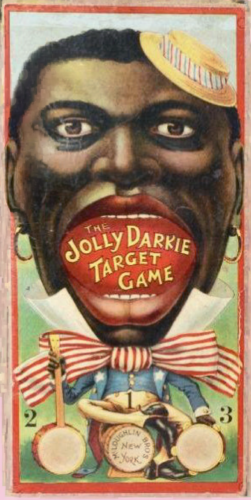
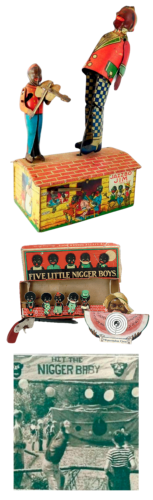
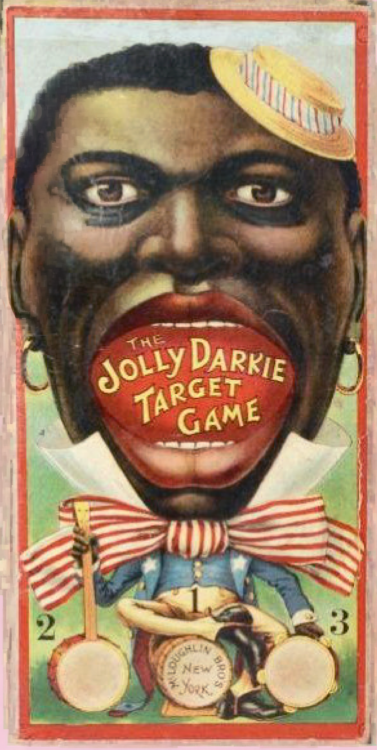
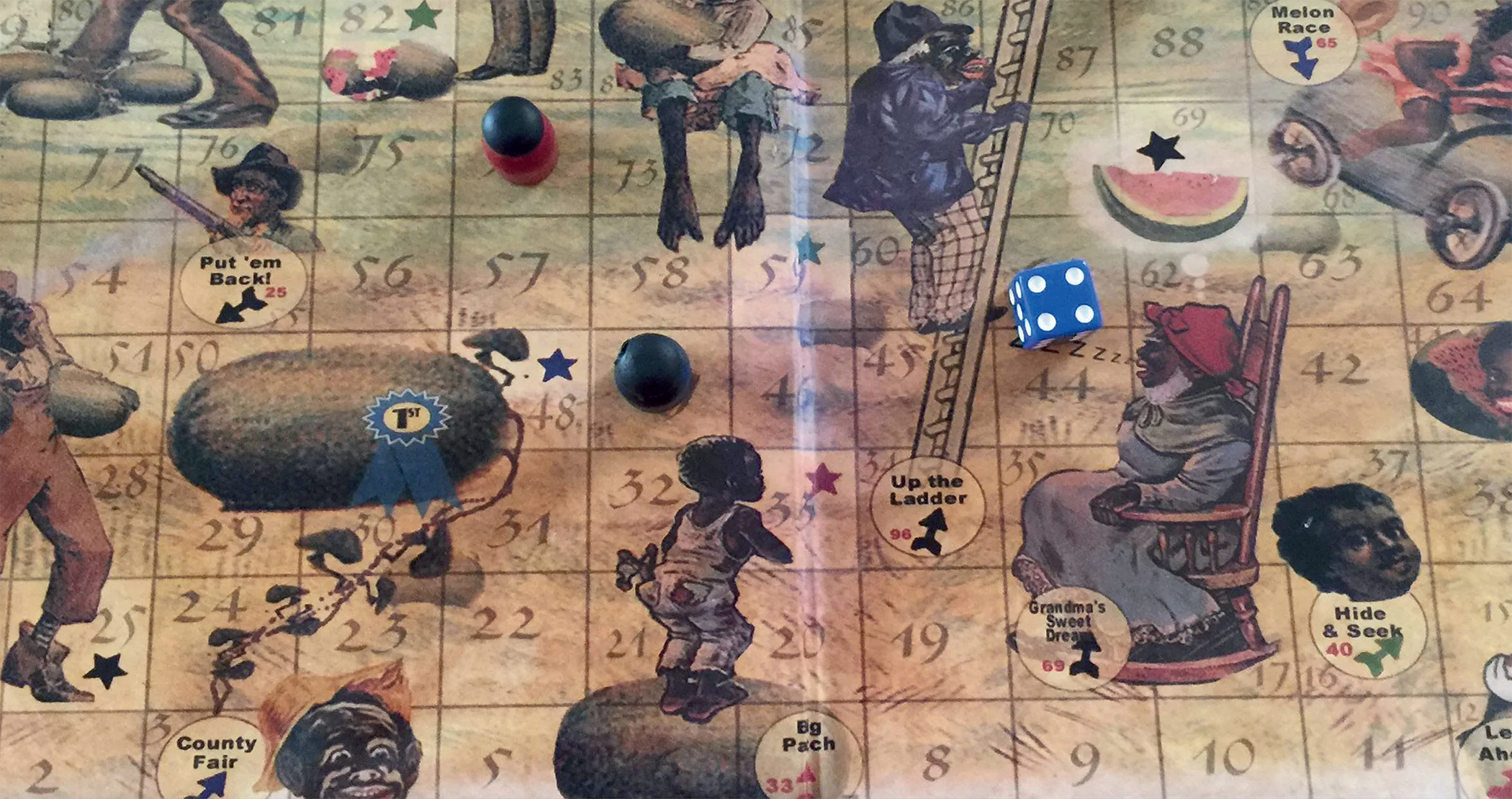
Board games were first developed in the 1830s and became more popular with American middle-class families as racial prejudice and segregation grew across the country in the late nineteenth century. These games showed intense white hostility toward African Americans. They created worlds where Black people were targets of violence and were shown as enjoying that violence. Card games also reinforced harmful stereotypes. “Old Maid,” oneof the most popular games played by American children, featured characters such as “Lily White,” “Jazzbo Jackson,” and “Melon Moe.” Children’s games, like children’s stories, taught children these racist stereotypes.
During the Jim Crow Era, there was a game called Salisbury. White children used the game to copy real-world racial terror lynchings. These lynchings took place in Salisbury, North Carolina, in 1902 and 1906. Rather than hiding racial violence from children, they were brought along and normalized the violence as a civic duty and a form of morbid entertainment.
Organized resistance to these portrayals in games came after the Great Migration. White manufacturers began to reduce the use of Black caricatures and images of direct violence against Black people. However, stereotypes continued to be recreated in board and card games.
After World War II, the Black consumer market grew. For the most part, Black entrepreneurs met the demand for games that encouraged Black pride.
Share
Explore Our Galleries


Breaking News!
Today's news and culture by Black and other reporters in the Black and mainstream media.
Ways to Support ABHM?
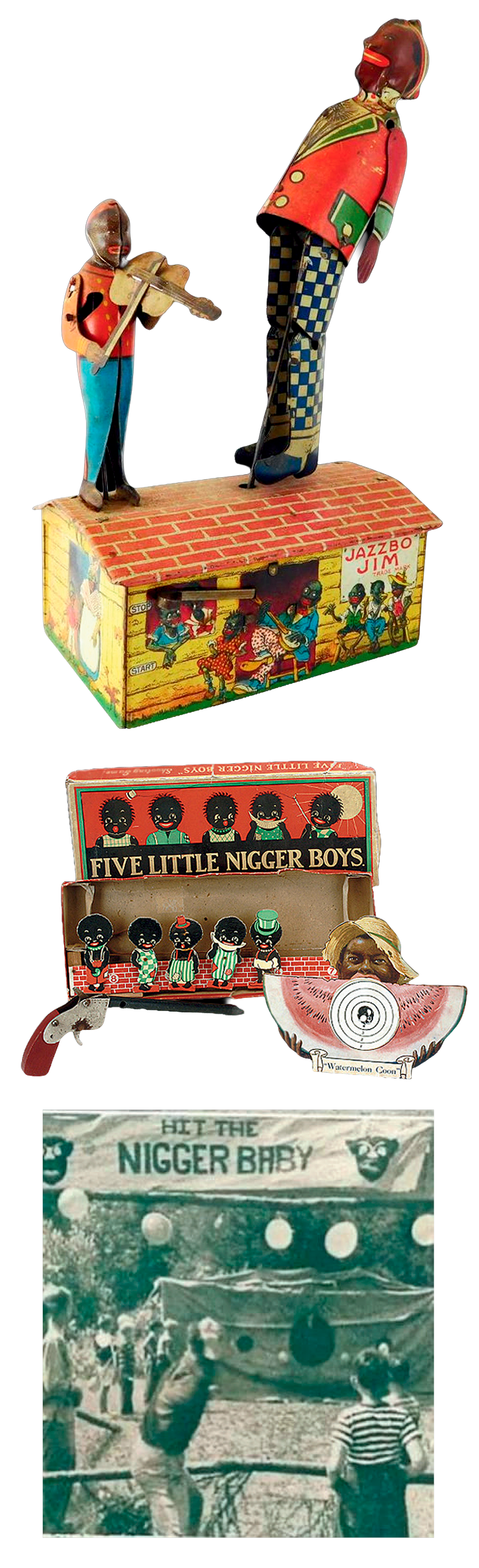
Board games were first developed in the 1830s and became more popular with American middle-class families as racial prejudice and segregation grew across the country in the late nineteenth century. These games showed intense white hostility toward African Americans. They created worlds where Black people were targets of violence and were shown as enjoying that violence. Card games also reinforced harmful stereotypes. “Old Maid,” oneof the most popular games played by American children, featured characters such as “Lily White,” “Jazzbo Jackson,” and “Melon Moe.” Children’s games, like children’s stories, taught children these racist stereotypes.
During the Jim Crow Era, there was a game called Salisbury. White children used the game to copy real-world racial terror lynchings. These lynchings took place in Salisbury, North Carolina, in 1902 and 1906. Rather than hiding racial violence from children, they were brought along and normalized the violence as a civic duty and a form of morbid entertainment.
Organized resistance to these portrayals in games came after the Great Migration. White manufacturers began to reduce the use of Black caricatures and images of direct violence against Black people. However, stereotypes continued to be recreated in board and card games.
After World War II, the Black consumer market grew. For the most part, Black entrepreneurs met the demand for games that encouraged Black pride.
An article for the Jim Crow Museum of Racist Memorabilia states:
“Over the past one hundred years or so the attitude
towards African Americans in games has evolved
from hostility to at least grudging respect.
This evolution has been uneven, however.
The most primitive period was by far the longest.
Furthermore, the recent and as yet much briefer
dramatic turn toward reverence is due to
Black initiative and participation.”
An article for the Jim Crow Museum of Racist Memorabilia states:
“Over the past one hundred years or so the attitude
towards African Americans in games has evolved
from hostility to at least grudging respect.
This evolution has been uneven, however.
The most primitive period was by far the longest.
Furthermore, the recent and as yet much briefer
dramatic turn toward reverence is due to
Black initiative and participation.”
Click for more An American Inheritance exhibits:
Welcome to gallery - An American Inheritance | The Story of Racist Memorabilia in WI & the US
Introducing / Unpacking Stereotypes
Click for more An American Inheritance exhibits:
Welcome to gallery - An American Inheritance | The Story of Racist Memorabilia in WI & the US
Introducing / Unpacking Stereotypes
Comments Are Welcome
Note: We moderate submissions in order to create a space for meaningful dialogue, a space where museum visitors – adults and youth –– can exchange informed, thoughtful, and relevant comments that add value to our exhibits.
Racial slurs, personal attacks, obscenity, profanity, and SHOUTING do not meet the above standard. Such comments are posted in the exhibit Hateful Speech. Commercial promotions, impersonations, and incoherent comments likewise fail to meet our goals, so will not be posted. Submissions longer than 120 words will be shortened.
See our full Comments Policy here.