Arturo Alfonso Schomburg: A Life Spent Preserving Black History
Share
Explore Our Galleries

Breaking News!
Today's news and culture by Black and other reporters in the Black and mainstream media.
Ways to Support ABHM?
By Scholar-Griot: Melanie Falu
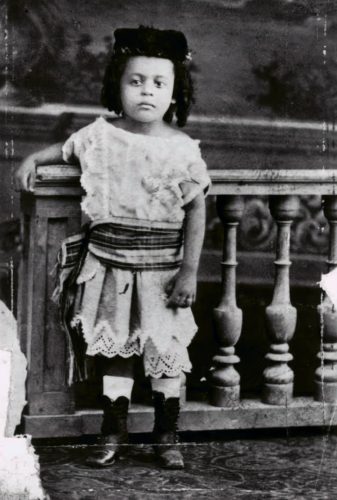
Arturo Alfonso Schomburg at age 4 | NYPL Digital Collections
Arturo Alfonso Schomburg was an Afro-Latino historian, book collector, and visionary whose life’s mission was to uncover and protect the history of people of African descent. He was born on January 24, 1874, in Santurce, Puerto Rico—just one year after slavery was abolished on the island. Santurce included the neighborhood of Loíza, known for its strong African heritage and lively Bomba dancing1. Arturo grew up surrounded by these cultural traditions. His mother, Mary Joseph, was a freeborn woman from St. Croix, and his father, Carlos Federico Schomburg, was a merchant whose father had immigrated from Germany.
Early Life and Awakening
As a boy, Arturo walked several miles to school each day. On the way, he often paused outside cigar factories where tabaqueros (cigar makers) read aloud and debated issues like racism, inequality, and colonialism. These powerful conversations opened his eyes to the way society treated people differently based on race.
In school, Arturo grew troubled by the history lessons he heard. His teachers praised famous explorers and “founders,” but every time Arturo asked whether any of them were Black, he was told that people of African descent had not achieved anything important. This answer hurt him deeply—but it also fueled him. He became determined to prove that this claim was wrong. Inspired by leaders like Toussaint L’Ouverture2 of Haiti and Puerto Rican independence hero Dr. Ramón Emeterio Betances, Arturo began reading everything he could find about Black history.
Activism and the Quest for Evidence
At age 17, Arturo left Puerto Rico and moved to New York City to find better opportunities. Many other Puerto Ricans did the same, as the island faced harsh economic conditions under colonial rule.
In New York, he first settled on the Lower East Side where he connected with other activists who supported independence movements in Cuba and Puerto Rico. He helped found a political club called Las Dos Antillas3 and joined a Spanish-speaking Masonic lodge4, where he met intellectuals and organizers from across the Black diaspora.
Arturo and his friends believed that knowing true history could help people fight injustice. They understood that if African-descended people knew about the great contributions their ancestors had made around the world, they would gain pride, confidence, and power. Arturo dedicated himself to searching for and collecting books, manuscripts, songs, letters, and artifacts that proved this history. What began as a personal mission soon grew into a global quest.
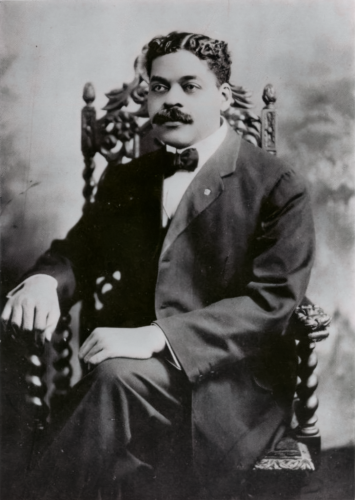
Arturo Alfonso Schomburg, 1910
He married his first wife, Elizabeth “Bessie” Hatcher, in New Orleans. Witnessing segregation in the South strengthened his belief that the fight for freedom and equality connected Black people everywhere—not only throughout the Caribbean. Soon after their marriage, Arturo and Bessie moved to West 62nd Street, in the culturally rich Black and Afro-Latino community of San Juan Hill.
In 1911, Arturo co-founded the Negro Society for Historical Research5, where African, Afro-Caribbean, and African American scholars could work together. He later became the first and last president of the American Negro Academy6 and helped build important research collections at Fisk University7.
Legacy in Harlem
By the 1920s, Arturo’s passion had led him to gather more than 4,000 items—books, artworks, manuscripts, and firsthand accounts of enslaved people. His collection was one of the most important archives of Black history in the world.
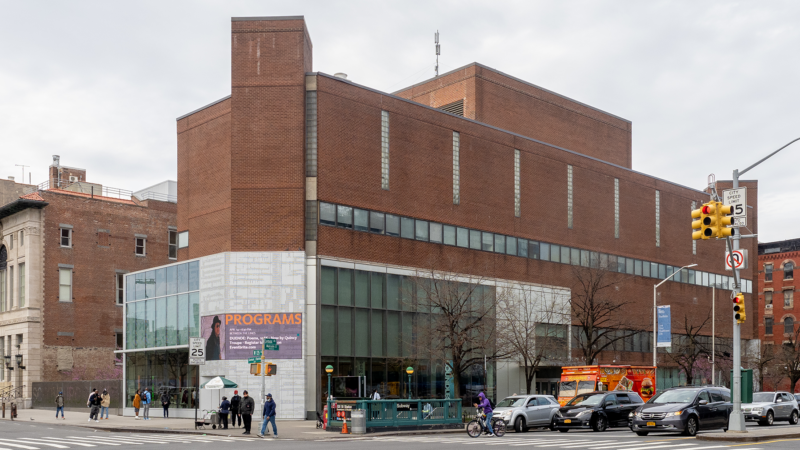
In 1926, the New York Public Library purchased his extraordinary collection for $10,000. It became the foundation of the Division of Negro History at the library’s Harlem branch. Arturo was appointed curator, and the research center eventually took on his name: The Schomburg Center for Research in Black Culture8.
Arturo became a key figure of the Harlem Renaissance9. Writers and leaders such as Langston Hughes, W.E.B. Du Bois, Marcus Garvey, Gwendolyn Bennett, Arna Bontemps, Georgia Douglas Johnson, Jessie Redmon Fauset, and Carter G. Woodson visited him often for guidance and inspiration. Many used his research to fuel their own groundbreaking work.
Arturo didn’t just collect history—he wrote it too. He published articles and books about the African diaspora, showing not only the struggles people faced but also their creativity, intelligence, and resilience.
Arturo Alfonso Schomburg died on June 10, 1938, in Brooklyn. But his legacy lives on in Harlem, where the Schomburg Center stands as a powerful reminder that the history of people of African descent is rich, global, and essential. Arturo continues to prove wrong those teachers past and present who dismiss Black excellence and achievement. His life’s work shows that African-descended people have shaped societies—and the world—in countless and deeply meaningful ways.
Some of Arturo Schomburg’s Notable Research Collections

Schomburg later in life | NYPL Digital Collections
- Frederick Douglass speeches
- Phyllis Wheatley writings
- Benjamin Banneker’s almanacs
- Ira Aldridge materials
- Caterina Jarboro collection
- Gustavus Vassa (Olaudah Equiano) narratives
- Ignacio Sacho narratives
- Alexander Crummell’s letters and sermons
Footnotes
1One of Puerto Rico’s most important cultural expressions, this traditional Afro-Puerto Rican music and dance form began among enslaved Africans on the island 400+ years ago. It is a conversation between the dancer and the lead drummer. The dancer improvises movements; the drummer matches and responds to the dancer’s steps.
2Leader of the Haitian Revolution, the only successful large-scale slave revolt in history—and the movement that created the first free Black republic in the Americas.
3Refers to two Caribbean islands that share a deep Afro-Caribbean and Latin cultural history: Puerto Rico and Cuba.
4An organization of “Freemasons” whose members value moral development, community service, and mutual support. Known for rituals, symbols (like the square and compass), and a focus on ethics, education, and brotherhood. Freemasonry spread from Europe to the Caribbean and Latin America in the 1700s and 1800s.
5Founded in 1911 in New York City, the NSHR was an intellectual and cultural organization that brought together historians, writers, activists, collectors, and other scholars from Africa, the Caribbean, and the U.S. Its purpose was to gather and share evidence of the achievements of people of African descent, at a time when mainstream institutions ignored or denied Black history.
6Founded in Washington, D.C., in 1897, the American Negro Academy was a learned organization of Black scholars, writers, theologians, and activists. Created at a time when mainstream universities, journals, and historical societies regularly excluded or dismissed Black thinkers, its mission was to:
- Promote serious research into Black history, culture, and achievement
- Challenge and refute false scientific and historical claims of Black inferiority
- Support a new generation of Black scholars
- Publish scholarship that centered the experiences of African-descended people
7A private historically Black university (HBCU) located in Nashville, Tennessee. Founded in 1866, just after the Civil War, it has played a major role for African American women and men in education, the arts, and civil rights leadership.
8Schomburg Center for Research in Black Culture (NYC): 515 Malcolm X Boulevard (Lenox Avenue), New York, NY 10037 (USA)
9A major cultural, artistic, and intellectual movement led by African Americans during the 1920s and early 1930s. Centered in Harlem, New York City, it transformed Black creativity, identity, and political thought in the US. It was the first time in U.S. history that Black artists gained national—and international—recognition. It challenged negative stereotypes and showed the depth of Black culture in literature, music (especially jazz and blues), visual arts, theater, dance –– and social activism.
Citations
- Elinor Des Verney Sinnette, Arthur Alfonso Schomburg Black Bibliophile & Collector (Wayne State University Press, 1989)
- Schomburg Center for Research in Black Culture - https://www.nypl.org/about/locations/schomburg
Melanie Falu's contribution to ABHM reflects not only her professional expertise but also her personal testimony, offering readers a powerful perspective that bridges lived experience with broader social understanding. She is a Certified Professional in Talent Development with more than a decade of experience guiding professionals through transformation in corporate, legal, and technology sectors. With a background in Information Technology Project Management (M.S., NYU Polytechnic School of Engineering) and Social Sciences (B.A., The College of New Rochelle), she specializes in career strategy, adult learning, and change management. Melanie brings to her work a commitment to transparent communication and empowering others to navigate pivotal moments with clarity and purpose.