Stitt Targets Nichols, Tulsa’s First Black Mayor, Over Homelessness
Share
Explore Our Galleries









Breaking News!
Today's news and culture by Black and other reporters in the Black and mainstream media.
Ways to Support ABHM?
By Nehemiah Frank, Black Wall Stree Times
White Political Paternalism on Black Leadership in America: A Historical Pattern Targeting Black Mayors
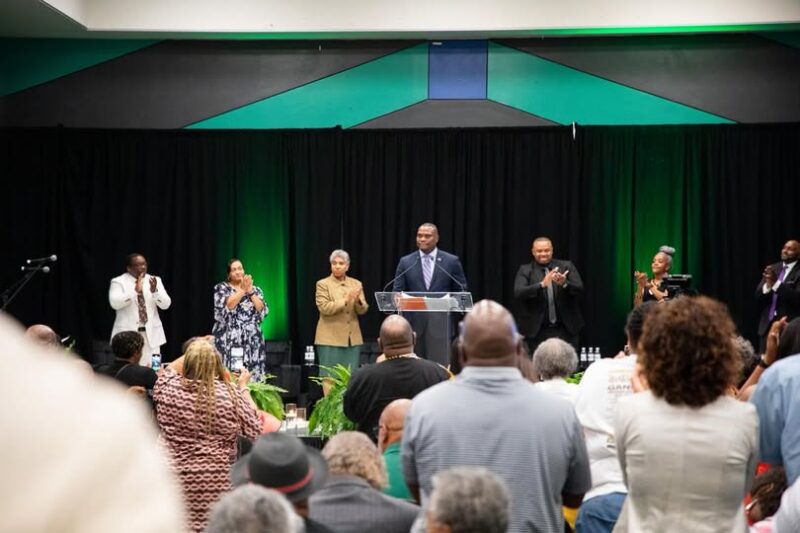
TULSA, Okla. — Across the country, Black mayors are facing heightened scrutiny and intervention from state and federal leaders. From Donald Trump’s deployment of federal forces in majority-Black cities during his presidency, to governors sending the National Guard into urban centers, a pattern has emerged: Black leadership is being targeted.
Now, Oklahoma Republican Governor Kevin Stitt appears to be following that same playbook. On Thursday, Stitt announced Operation SAFE (Swift Action for Families Everywhere), a new initiative directing state agencies to clear homeless encampments on state-owned land in Tulsa. His announcement places direct pressure on Tulsa’s first Black mayor, Monroe Nichols.
“Tulsa is a beautiful city. I lived there for years. But today, everybody can see the disaster it’s turning into— homeless people on every corner, trash piling up, and Oklahoma families are being forced to live in fear,” Governor Stitt said in a statement.
“This is the city’s job, but Mayor Nichols and Tulsa leadership haven’t met the level of action needed to keep neighborhoods safe. Oklahoma is going to step in to do our part and clean it up. Once we’ve done so, it’ll be on the City to keep Tulsa clean and safe. If they refuse, then we’ll be forced to take further action to protect Tulsans,” the governor added.
Nichols pushed back immediately against the governor’s claims.
“First of all, Kevin Stitt has shown himself again to be an unserious person. When I took office, I inherited a homelessness crisis largely unaddressed by anyone in public office, including our two-term governor, who disbanded the interagency council on homelessness, which had a crippling impact on service providers, leading to what we have today,” Nichols wrote in a statement on social media.
[…]
Stitt’s controversial intervention comes even as Tulsa’s homelessness numbers show signs of slowing growth.
Mayor Nichols has also been overseeing the project to reveal the Tulsa Massacre victims, which happened during the Jim Crow era.
Comments Are Welcome
Note: We moderate submissions in order to create a space for meaningful dialogue, a space where museum visitors – adults and youth –– can exchange informed, thoughtful, and relevant comments that add value to our exhibits.
Racial slurs, personal attacks, obscenity, profanity, and SHOUTING do not meet the above standard. Such comments are posted in the exhibit Hateful Speech. Commercial promotions, impersonations, and incoherent comments likewise fail to meet our goals, so will not be posted. Submissions longer than 120 words will be shortened.
See our full Comments Policy here.