Madison police kill man in broad daylight in front of witnesses
Share
Explore Our Galleries









Breaking News!
Today's news and culture by Black and other reporters in the Black and mainstream media.
Ways to Support ABHM?
Isiah Holmes, Wisconsin Examiner
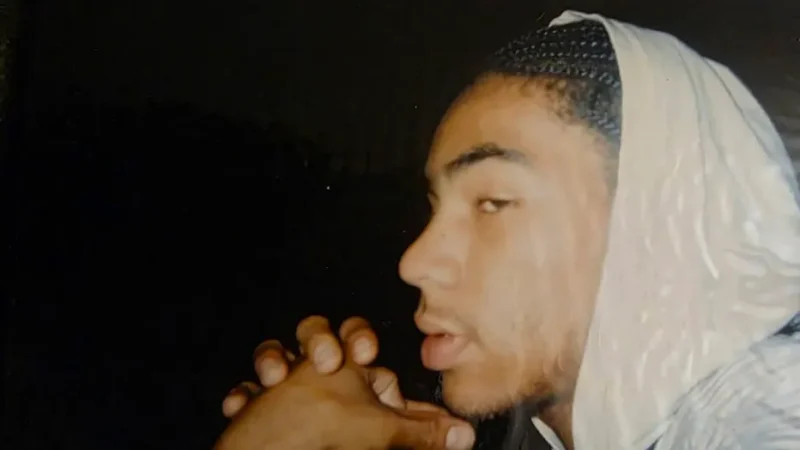
In the center of a busy intersection on Williamson and Baldwin Streets in Madison, Wisconsin, several officers from the Madison Police Department wrestled a man to the ground in the early afternoon Wednesday, used a taser on him and then shot him at close range. Unable to cross the intersection, several vehicles stopped and their drivers got out to film the arrest. In videos posted online, residents can be heard screaming in shock and anger. Hundreds of protesters converged on the scene Wednesday evening and marched downtown, interrupting the Concert on the Square. Protest speakers identified the man as Corey Ruiz and a crowd of hundreds of people chanted his name.
Madison Police Chief John Patterson held a press conference Wednesday, urging residents to keep the Willy Street neighborhood in mind and the “historical trauma” that arises when officer-involved shootings occur. Patterson said that officers responded to a call concerning a person apparently checking parked vehicles. When officers encountered the man he fled on a bicycle, riding through backyards until he lost the officers. They caught up with him again, at which point the man “either fell off or was taken off the bicycle by officers,” Patterson said. 3
During the struggle, Patterson said the man produced a “fixed blade knife,” injuring one of the officers who then fired his weapon multiple times. Patterson described the officer as a “veteran” who was the only officer to fire out of the four who were involved in the struggle. Video also shows one of the officers seemingly stomping the man while he was on the ground as the first shot was fired.
The Wisconsin Department of Justice (DOJ) Division of Criminal Investigation (DCI) is leading the investigation into the shooting. Wisconsin law dictates that officer-involved shootings must be investigated by an outside, uninvolved agency to maintain objectivity. After the investigation is over, which may take weeks or months, a local district attorney reviews the findings and decides whether or not to charge an officer for the shooting. Such charges are exceedingly rare in Wisconsin.
Due to the ongoing investigation Patterson declined to answer questions about the details of the shooting Wednesday. Madison police officers do not have body cameras, and Patterson has pushed for body cameras to be included in the 2027 city budget. Patterson said that the man’s family had been notified before he spoke with the media, and he expressed his sympathies to them.
Democratic primary candidates in the governor’s race issued statements about the shooting. Rep. Francesca Hong (D-Madison) said that the police had “killed a Black man just a few blocks from our campaign office and just a few blocks from where Madison police murdered Tony Robinson in 2015.”9999
Learn how other officials have reacted, who the victim was, and the city’s response.
Follow this infuriating story in our Breaking News.
Comments Are Welcome
Note: We moderate submissions in order to create a space for meaningful dialogue, a space where museum visitors – adults and youth –– can exchange informed, thoughtful, and relevant comments that add value to our exhibits.
Racial slurs, personal attacks, obscenity, profanity, and SHOUTING do not meet the above standard. Such comments are posted in the exhibit Hateful Speech. Commercial promotions, impersonations, and incoherent comments likewise fail to meet our goals, so will not be posted. Submissions longer than 120 words will be shortened.
See our full Comments Policy here.