How One Woman Landed in Jail Over a Fight to Protect Her Family’s Land
Share
Explore Our Galleries









Breaking News!
Today's news and culture by Black and other reporters in the Black and mainstream media.
Ways to Support ABHM?
Alliyah Wright, CapitalB
Since 2022, a Black Muslim American mother of seven has fought to inherit land her third great-grandfather purchased in rural Mississippi.
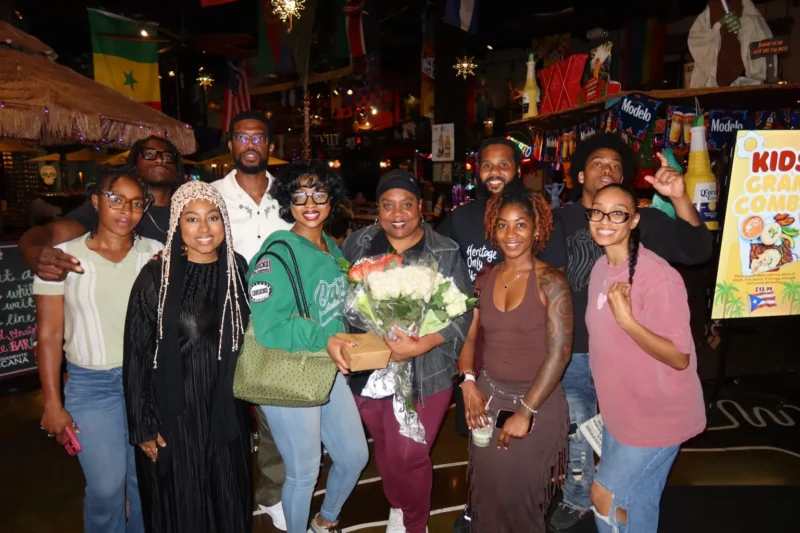
Jennine Labuzan spent two weeks in federal custody in June — shuttled from her residence in Georgia to Tennessee to Mississippi — after refusing a judge’s order to sign away more than 1,300 acres of land she says her family has owned for generations.
Her arrest and release came after a legal battle she never expected to still be fighting. It started with a name.
Growing up in the Bay Area, Labuzan remembered sitting at her grandparents’ feet, listening as they rattled off a list of names of those who had long passed away.
For years, she engulfed herself in Black history, focusing on the places she’s called home: in Kuala Lumpur, Malaysia; and in California and Georgia. But, she wanted to know more about her own ancestral lineage.
She gathered the names she wrote down, inputting them one by one into her family tree. Then, she found something new she never knew about her family history: Her third-great grandfather, Charles A. Labuzan, a New Orleans native, owned an interest in over 1,300 acres in rural Mississippi.
[…]
She began studying constitutional law, a diversion from the psychology degree she obtained at Howard University. She paid for a title abstract and filed a deed to record her ownership. In September 2022, she sued a group of law firms, farms, and agricultural businesses that she alleged occupied her land illegally. She anticipated the case would be resolved in six months.
Instead, she’s been on an emotional and legal rollercoaster ever since.
Learn how the roadblocks aren’t stopping Labuzan.
Uncovering Black roots often leads to surprises.
Follow more Black news
Comments Are Welcome
Note: We moderate submissions in order to create a space for meaningful dialogue, a space where museum visitors – adults and youth –– can exchange informed, thoughtful, and relevant comments that add value to our exhibits.
Racial slurs, personal attacks, obscenity, profanity, and SHOUTING do not meet the above standard. Such comments are posted in the exhibit Hateful Speech. Commercial promotions, impersonations, and incoherent comments likewise fail to meet our goals, so will not be posted. Submissions longer than 120 words will be shortened.
See our full Comments Policy here.