Clotilda descendants mark anniversary of last slave ship
Share
Explore Our Galleries









Breaking News!
Today's news and culture by Black and other reporters in the Black and mainstream media.
Ways to Support ABHM?
By Associated Press
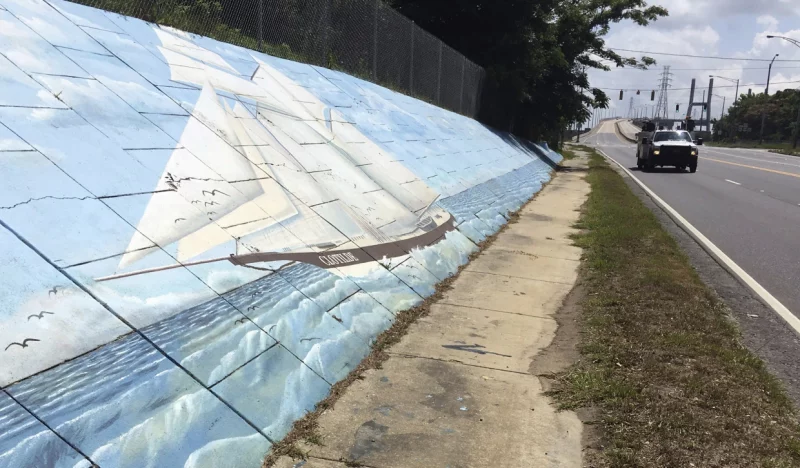
Descendants of the last African people abducted into slavery and brought to America’s shores gathered over the weekend on the banks of an Alabama river to pay tribute to their ancestors.
The descendants of the 110 people aboard the Clotilda, the last known slave ship to bring enslaved African people to the United States, held a ceremony to mark the anniversary of the vessel’s arrival.
Dressed in white and walking slowly to the beat of an African drum, the descendants made their way to the banks of the Mobile River near Alabama’s coast. A wreath of white, yellow and red flowers was carried into the river by a kayaker and released into the waters.
The event marked the anniversary of the ship arriving 162 years ago with 110 enslaved people brought to the country against their will, Darron Patterson, president of the Clotilda Descendants Association, said in a telephone interview with The Associated Press.
Read more about the last slave ship to the Americas.
Kidnapped African people were forced to undergo the Middle Passage on ships like the Clotilda.
Never miss an important anniversary when you bookmark our breaking news archive.
Comments Are Welcome
Note: We moderate submissions in order to create a space for meaningful dialogue, a space where museum visitors – adults and youth –– can exchange informed, thoughtful, and relevant comments that add value to our exhibits.
Racial slurs, personal attacks, obscenity, profanity, and SHOUTING do not meet the above standard. Such comments are posted in the exhibit Hateful Speech. Commercial promotions, impersonations, and incoherent comments likewise fail to meet our goals, so will not be posted. Submissions longer than 120 words will be shortened.
See our full Comments Policy here.