Black Creek Freedmen Sue Chief David Hill Over Unissued Citizenship Cards
Share
Explore Our Galleries









Breaking News!
Today's news and culture by Black and other reporters in the Black and mainstream media.
Ways to Support ABHM?
One year after the tribal Supreme Court’s landmark ruling, Rhonda Grayson and Jeffrey Kennedy say Chief David Hill still refuses to issue citizenship cards to Black Creeks.
OKLAHOMA CITY — Creek Freedmen descendants Rhonda Grayson and Jeffrey Kennedy filed a federal lawsuit Thursday against Muscogee (Creek) Nation Principal Chief David Hill, the Nation’s Citizenship Board and its individual members.
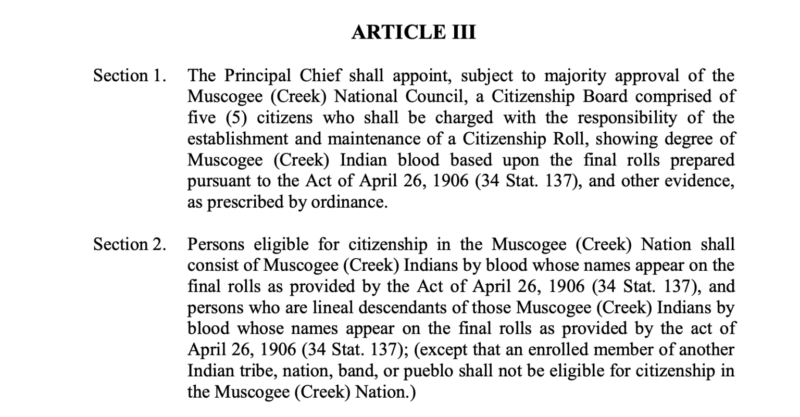
The lawsuit was filed exactly one year after the Muscogee Nation Supreme Court unanimously ruled that the board acted “contrary to law” by denying Grayson and Kennedy citizenship solely because they could not trace an ancestor to the Creek By-Blood Dawes Roll.
The court directed the board to recognize applicants who can establish lineal descent from either the Creek By-Blood Roll or the Creek Freedmen Roll.
Grayson and Kennedy announced the federal action during a July 23 press conference in Oklahoma City. Their attorneys allege Hill and the Citizenship Board have defied the tribal court’s final judgment by refusing to issue the pair citizenship cards.
“Nearly 100,000 Black Creeks across the country were ready to receive their citizenship cards,” lead attorney Damario Solomon-Simmons said.
The decision could create a path to citizenship for Black Creek descendants nationwide.
[…]
For more than a century, Creeks of African descent remained citizens of the Nation.
That changed after the Muscogee Nation adopted a new constitution in 1979. It restricted citizenship to descendants of people listed as “Creek by blood” on the Dawes Rolls, excluding descendants whose ancestors appeared only on the Creek Freedmen Roll.
Learn more about the fight for inclusion and identity.
Some compared restoring citizenship to ending apartheid.
Comments Are Welcome
Note: We moderate submissions in order to create a space for meaningful dialogue, a space where museum visitors – adults and youth –– can exchange informed, thoughtful, and relevant comments that add value to our exhibits.
Racial slurs, personal attacks, obscenity, profanity, and SHOUTING do not meet the above standard. Such comments are posted in the exhibit Hateful Speech. Commercial promotions, impersonations, and incoherent comments likewise fail to meet our goals, so will not be posted. Submissions longer than 120 words will be shortened.
See our full Comments Policy here.