‘We’re witnessing the end of the America that made our lives possible’: author Eddie Glaude on US’s 250th birthday
Share
Explore Our Galleries









Breaking News!
Today's news and culture by Black and other reporters in the Black and mainstream media.
Ways to Support ABHM?
Adria R Walker, The Guardian
Glaude’s new book shows political turmoil historically reaching its boiling point around Fourth of July celebrations
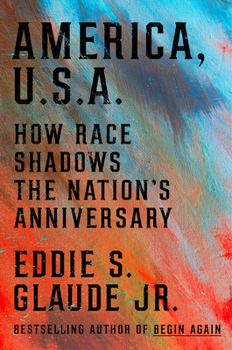
“The mere presence of Black people at the Fourth of July celebrations, acting as if freedom belonged to them, exposed the lie at the heart of this ritual of remembrance by the nation: ours was not a nation committed to liberty and equality.” So goes the second chapter of the author Eddie S Glaude Jr’s latest book America, U.S.A.: How Race Shadows the Nation’s Anniversaries.
The Princeton University professor’s new text illustrates how political turmoil has historically reached a boiling point around celebrations of the nation’s founding on the Fourth of July. The text is especially relevant now as the United States approaches its 250th birthday.
[…]
Against today’s backdrop, the 250th celebrations come with the normalizing of white supremacist rhetoric, the gutting of the Voting Rights Act and the threatening of birthright citizenship.
The Guardian spoke with Glaude about his book and how it explains America’s current political moment. This interview has been condensed and edited for clarity.
What do you make of the cyclical nature of race relations in this country, in which progress is typically marred by these attacks?
I think it’s rooted in the chapter “Freedom is the white man’s gift”, which flows out of the divided soul of the nation. I make a claim that America suffers from a kind of double consciousness, that it imagines itself as a beacon of freedom and as a white republic. And you can’t hold those two claims together without contradiction or depositing a kind of madness at the heart of the country. Freedom is seen as the possession of a particular group of folk who can give it and take it away. And so when we find ourselves in these moments where we want to live up to our ideals and address racial injustice, we typically do so in a sentimentalized way: “What can we do for you?”
But that charity runs dry, such as at the end of Reconstruction, where people said: “We are done with the issue of slavery, but we don’t want Black folk to have full citizenship rights.” Folks who were anti-slavery suddenly were deeply suspicious about extending the franchise to Black people. Or we have these other moments where folks are asking the question, “What else do you want? We’ve given you so much. Show some gratitude.” We find ourselves in these cycles of sentimentality and white rage, as Carol Anderson talks about. So we find ourselves, over and over again, in these moments of backlash and then a desire for absolution.
[…]
What can people do to push back on the distortion of history?
“Disremembering” is so important, right? That’s Toni Morrison’s language, this active forgetting that echoes “dismembering”. There’s a violence that attends this.
In 1876, after the carnage of the civil war, over 600,000 people dead on land and sea, President [Ulysses S] Grant and others focused on talking about the business acumen of the country, its technological fortitude, its innovation. Black folks are effectively disappearing because our presence reveals the lie of that narrative.
Continue reading the interview.
Read what Frederick Douglass had to say about the meaning of July 4th for Black people.
Comments Are Welcome
Note: We moderate submissions in order to create a space for meaningful dialogue, a space where museum visitors – adults and youth –– can exchange informed, thoughtful, and relevant comments that add value to our exhibits.
Racial slurs, personal attacks, obscenity, profanity, and SHOUTING do not meet the above standard. Such comments are posted in the exhibit Hateful Speech. Commercial promotions, impersonations, and incoherent comments likewise fail to meet our goals, so will not be posted. Submissions longer than 120 words will be shortened.
See our full Comments Policy here.