Descendants of Frederick Douglass and John Brown on Juneteenth warn against backsliding on civil rights
Share
Explore Our Galleries









Breaking News!
Today's news and culture by Black and other reporters in the Black and mainstream media.
Ways to Support ABHM?
Tom Macdonald, Whhy
Douglass Greene and Evans called out acts of the current Trump administration and Supreme Court, while discussing the lasting impact of slavery in the United States.
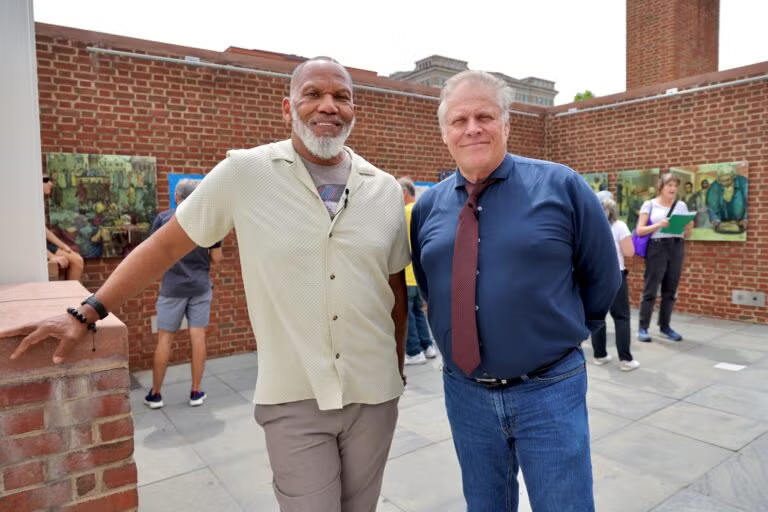
Two direct descendants of prominent abolitionists reflected on the legacy of slavery and the challenges facing Black Americans during a visit to WHYY on Juneteenth.
Kevin Douglass Greene, a descendant of Frederick Douglass, said he has little sympathy for people who believe they have lost rights or privileges, noting that African Americans spent generations fighting for basic rights and opportunities.
“I can’t feel sorry for … certain populations in the United States [who] felt that they lost their rights and privileges. Just think about the amount of time that it took for African Americans in this country to achieve those rights and privileges,” Douglass Greene said.
Douglass Greene said the glass ceiling that has long obstructed advancement for Black Americans has been covered in cement.
“It’s harder to get through cement than glass,” he said. “We just have to do better.”
Discover why Greene criticized a recent court ruling that impacts the Black community.
Learn about the civil promise of Juneteenth.
Stop by our Breaking News for more articles about Juneteenth.
Comments Are Welcome
Note: We moderate submissions in order to create a space for meaningful dialogue, a space where museum visitors – adults and youth –– can exchange informed, thoughtful, and relevant comments that add value to our exhibits.
Racial slurs, personal attacks, obscenity, profanity, and SHOUTING do not meet the above standard. Such comments are posted in the exhibit Hateful Speech. Commercial promotions, impersonations, and incoherent comments likewise fail to meet our goals, so will not be posted. Submissions longer than 120 words will be shortened.
See our full Comments Policy here.