Trump Resurrected the Statue of a Slave Owner. Its Pedestal Cost Taxpayers $527K.
Share
Explore Our Galleries









Breaking News!
Today's news and culture by Black and other reporters in the Black and mainstream media.
Ways to Support ABHM?
Dan Friedman and Abby Vesouli, Mother Jones
Contracting documents obtained by Mother Jones indicate the price was nearly double the government’s estimate.
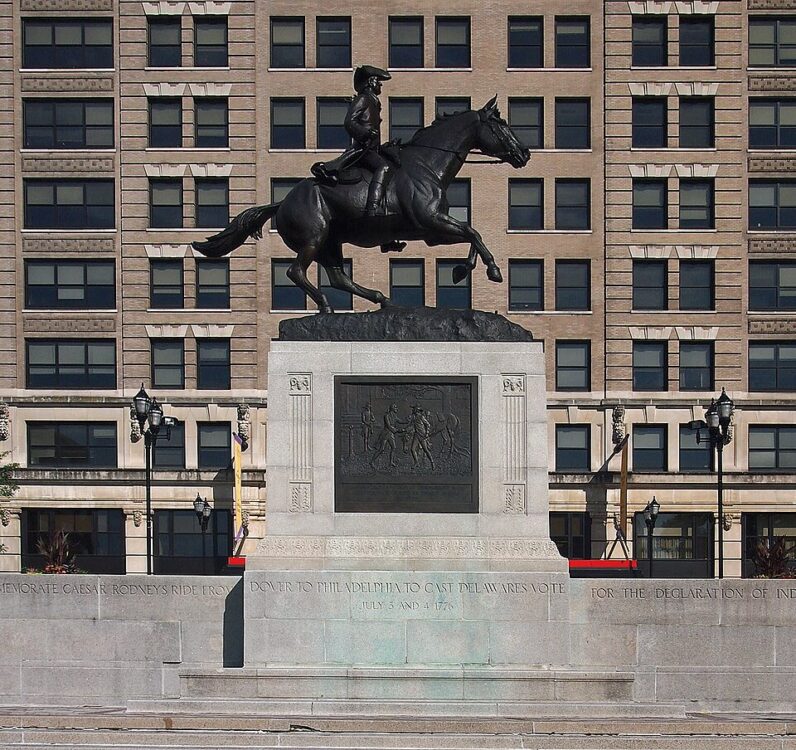
In April, the National Park Service placed a statue of Caesar Rodney, one of America’s Founding Fathers, in Freedom Plaza, a small park near the White House.
That installation drew notice, and criticism, because Rodney, a plantation owner from Delaware who played a key role in crafting the Declaration of Independence, enslaved people—a complication that in 2020 led to the statue being taken down from its previous perch in Wilmington.
But the administration didn’t just resurrect the statue of a slave owner and place it in a prime location in the nation’s capital; they spent a striking amount of money to do it. Documents obtained by Mother Jones show the National Park Service, which is part of the Department of the Interior, paid $527,226 just to build a base on which to place the sculpture, which had been sitting in storage. Contracting documents obtained by Mother Jones indicate the cost for the pedestal was nearly double the government’s original estimate.
The documents also show that the agency initially awarded the contract for refurbishing all of Freedom Plaza last December, then added the Rodney statue in January in a no-bid process. The agency modified the existing contract, conducting no competitive bidding, and agreed to the sharply higher price because—as with much of the administration’s “beautification” effort connected to the anniversary—it was in a rush.
“The work was expedited to ensure it is done before our nation’s 250th,” an Interior Department official told Mother Jones. “All of the projects throughout DC are set to be done before the Fourth, so they have to be done on a rolling basis.”
Keep reading about what some describe as an unethical process.
Discover the brutal reality of slavery.
Comments Are Welcome
Note: We moderate submissions in order to create a space for meaningful dialogue, a space where museum visitors – adults and youth –– can exchange informed, thoughtful, and relevant comments that add value to our exhibits.
Racial slurs, personal attacks, obscenity, profanity, and SHOUTING do not meet the above standard. Such comments are posted in the exhibit Hateful Speech. Commercial promotions, impersonations, and incoherent comments likewise fail to meet our goals, so will not be posted. Submissions longer than 120 words will be shortened.
See our full Comments Policy here.