USDA Cuts Food Business Centers Supporting Black Farmers
Share
Explore Our Galleries









Breaking News!
Today's news and culture by Black and other reporters in the Black and mainstream media.
Ways to Support ABHM?
by Aallyah Wright, Capital B
The Regional Food Business Centers distributed more than $600,000 and helped launch 325 new businesses.
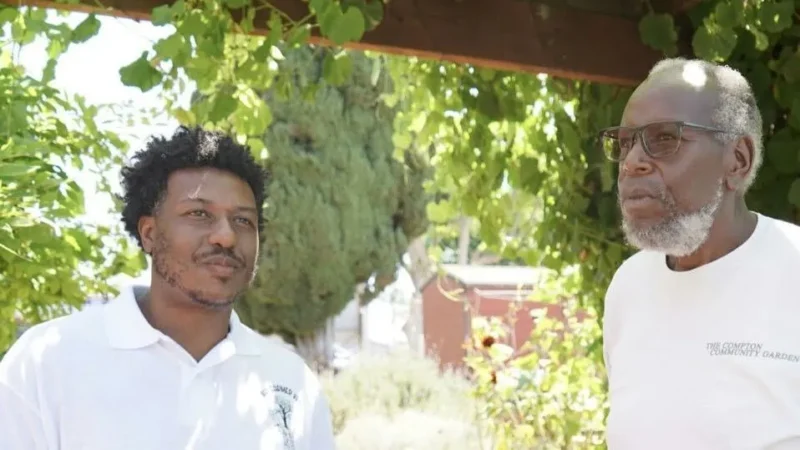
Over the past seven months, Kenneth Sparks lost at least five federal grants as a result of cancellations and funding freezes. The grants would have supported his four-year-old farm, where he grows vegetables, and sells seeds and eggs.
Now, the Southern California farmer is about to lose out again.
For the past two years, he gave free technical assistance, support, and education to Black farmers and producers in Los Angeles, Inland Empire, and San Diego. His work was funded through the Southwest Regional Food Business Center. The Southwest center — led by the University of California — covers Arizona, California, Nevada, Utah, and Tribal communities. It is one of 12 centers nationwide that was part of a $400 million program established under the Biden administration. It was designed as a pandemic-era, five-year initiative that would conclude in 2028.
Sparks was planning a gathering in California to help more farmers network and connect to resources. But that won’t happen now.
On July 15, the USDA announced the elimination of the Regional Food Business Centers program, which provided up to $10,000 in grant funding to small and midsized farms and food businesses across the country. The funds were used for staff support, business planning activities, software implementation, equipment for food safety, processing, or packaging.
Eight of the 12 centers nestled across the country will honor existing commitments until September. But the rest will be shut down effective immediately.
Learn which programs will close.
Our breaking news section details policy changes that impact Black Americans.
Comments Are Welcome
Note: We moderate submissions in order to create a space for meaningful dialogue, a space where museum visitors – adults and youth –– can exchange informed, thoughtful, and relevant comments that add value to our exhibits.
Racial slurs, personal attacks, obscenity, profanity, and SHOUTING do not meet the above standard. Such comments are posted in the exhibit Hateful Speech. Commercial promotions, impersonations, and incoherent comments likewise fail to meet our goals, so will not be posted. Submissions longer than 120 words will be shortened.
See our full Comments Policy here.