Pope Leo Finally Addresses His Black Ancestry and Slavery
Share
Explore Our Galleries









Breaking News!
Today's news and culture by Black and other reporters in the Black and mainstream media.
Ways to Support ABHM?
Joseph Williams, Word in Black
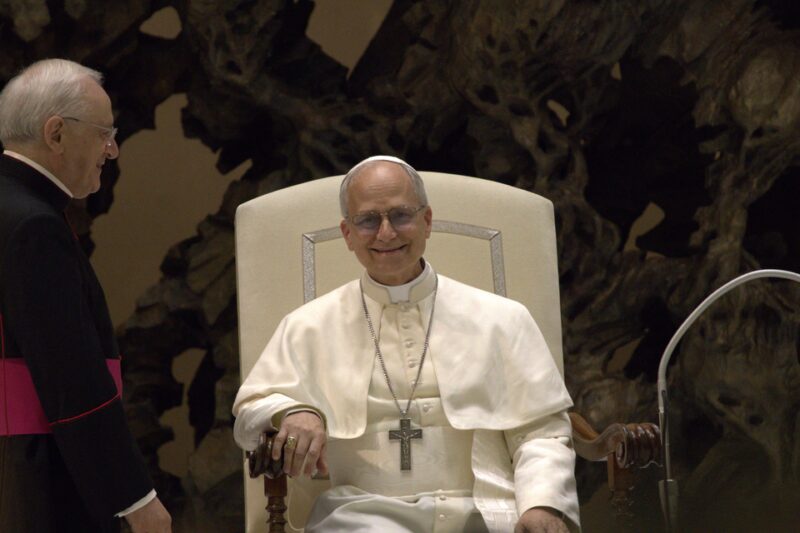
Since his election last year, Pope Leo XIV sidestepped one of the most unexpected questions to emerge from his historic election: Is the first American pope also Black?
Now, in his clearest public comments yet, the first American-born pope has acknowledged the complicated family history that spurred widespread discussions about race, identity and belonging.
LEARN MORE: Is the New Pope Black? The Answer Isn’t So Simple
Speaking to NBC News, the pontiff said his mother’s family included both enslaved people and slaveholders — a striking admission from a pope who had previously declined to publicly discuss genealogical research tracing his ancestry to New Orleans’ historic Creole community.
“On my mother’s side, we have people who were both slaves and slaveowners,” Leo said. “There’s a history of… growing up in the kind of experience that helps me to recognize myself, one of the greatest wealths of the United States.”
America’s ‘Greatest Wealths’
The pope did not describe himself as black. But he publicly confirmed his family’s mixed racial heritage, a fact that historians and genealogists uncovered within hours of his election. And they also reopened one of America’s oldest, thorniest conversations about race.
In a single sentence, the leader of 1.4 billion Catholics worldwide confirmed that his lineage runs through both sides of slavery’s ledger. The pope framed that history not as a statement about racial identity but as an expression of the American experience.
Discover how family trees are sometimes “gnarled by race.” Slavery often plays a role.
Comments Are Welcome
Note: We moderate submissions in order to create a space for meaningful dialogue, a space where museum visitors – adults and youth –– can exchange informed, thoughtful, and relevant comments that add value to our exhibits.
Racial slurs, personal attacks, obscenity, profanity, and SHOUTING do not meet the above standard. Such comments are posted in the exhibit Hateful Speech. Commercial promotions, impersonations, and incoherent comments likewise fail to meet our goals, so will not be posted. Submissions longer than 120 words will be shortened.
See our full Comments Policy here.