The Voting Rights Act is now a ‘dead letter’ after latest Supreme Court decision
Share
Explore Our Galleries









Breaking News!
Today's news and culture by Black and other reporters in the Black and mainstream media.
Ways to Support ABHM?
Zach Monetallaro, Politico
Wednesday’s Supreme Court decision leaves the landmark civil rights law on the books — but in name only, prominent legal scholars and the liberal justices argue.
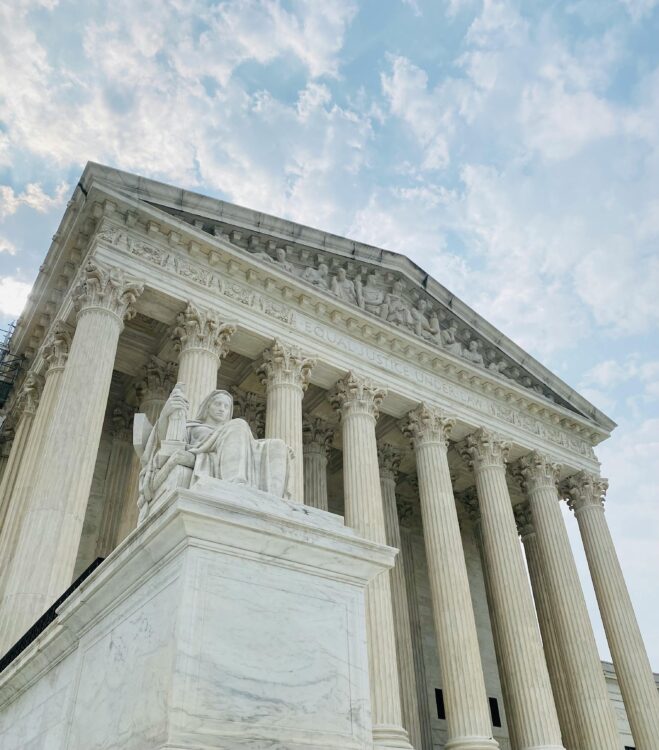
A long-held goal of the conservative legal movement came to fruition on Wednesday: The gutting of the Voting Rights Act.
The Supreme Court’s 6-3 decision in Louisiana v. Callais, a case challenging the drawing of a second majority-Black district in the state, left the landmark civil rights law on the books. But the racial protections in the law were so dramatically weakened as to render them effectively useless, the liberal minority on the court and prominent legal scholars argue.
The decision, Justice Elena Kagan wrote in her dissent, marks the “latest chapter in the majority’s now-completed demolition” of the law.
“Very little remains,” said NAACP general counsel Kristen Clarke, who led the Justice Department’s Civil Rights Division during the Biden administration. “There’s some small protections with respect to language access, an important prohibition on voter intimidation, but very little remains. This is a dark day in our democracy.”
The immediate impact of the decision on the upcoming midterms is not yet known, with primaries in many states already underway. But observers on both sides of the aisle expect dramatic overhauls of state maps by the 2028 elections — particularly across the South. Critics of the decision, including those in the court’s liberal minority, argue it will make it far easier for mapmakers to draw political lines that dilute the voting power of minorities, under the guise of doing it for purely partisan advantage.
Learn about the fight for Black voting rights.
Comments Are Welcome
Note: We moderate submissions in order to create a space for meaningful dialogue, a space where museum visitors – adults and youth –– can exchange informed, thoughtful, and relevant comments that add value to our exhibits.
Racial slurs, personal attacks, obscenity, profanity, and SHOUTING do not meet the above standard. Such comments are posted in the exhibit Hateful Speech. Commercial promotions, impersonations, and incoherent comments likewise fail to meet our goals, so will not be posted. Submissions longer than 120 words will be shortened.
See our full Comments Policy here.