‘Share the story’: Gravesite believed to belong to one of the oldest free Black persons in America restored in Boston
Share
Explore Our Galleries









Breaking News!
Today's news and culture by Black and other reporters in the Black and mainstream media.
Ways to Support ABHM?
Brandon Caldwell, The Grio
Mayor Michelle Wu called for a deeper look into American history after the discovery and marked the moment during the city’s July 4 festivities.
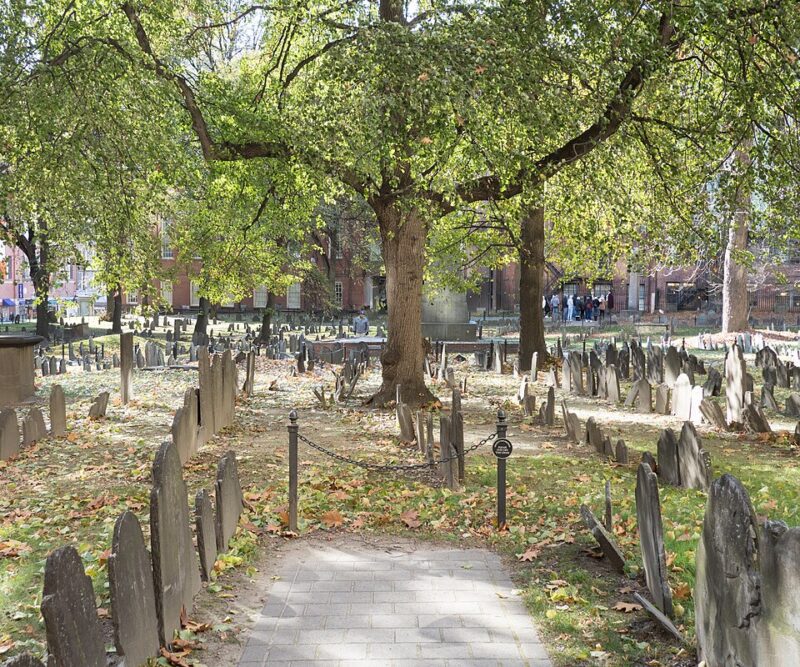
In light of America’s 250th birthday on Saturday, Boston Mayor Michelle Wu revealed that conservators at the city’s historic Granary Burying Ground discovered what is believed to be one of the oldest headstones belonging to a free Black man in America.
“That discovery is likely one of the oldest gravestones of a free Black person in America,” Wu said around the 13-minute mark of her speech at Faneuil Hall. “It’s been there all along. We just had to go look and share the story.”
In June, city archaeologists used a 251-year-old map to locate a Revolutionary War fort built on the eve of the Battle of Bunker Hill, according to Wu, who referenced the work in her commemorative speech. The trench where the gravestone was discovered was located, along with musket balls and gun flints from the battle, one of the earliest battles of the war for independence from England.
The gravesite was identified as belonging to a man named Sebastian Lake, a former slave who died free in 1729. The site is set to be among 40 new historical markers placed around the city to highlight Boston’s hidden history, including sites where students walked out in protest of segregation.
See the mayor’s comments below:
There has been a long fight to preserve Black burial grounds.
Comments Are Welcome
Note: We moderate submissions in order to create a space for meaningful dialogue, a space where museum visitors – adults and youth –– can exchange informed, thoughtful, and relevant comments that add value to our exhibits.
Racial slurs, personal attacks, obscenity, profanity, and SHOUTING do not meet the above standard. Such comments are posted in the exhibit Hateful Speech. Commercial promotions, impersonations, and incoherent comments likewise fail to meet our goals, so will not be posted. Submissions longer than 120 words will be shortened.
See our full Comments Policy here.