A former plantation becomes a space for healing, art and reparative history
Share
Explore Our Galleries









Breaking News!
Today's news and culture by Black and other reporters in the Black and mainstream media.
Ways to Support ABHM?
By Brianna Scott, NPR
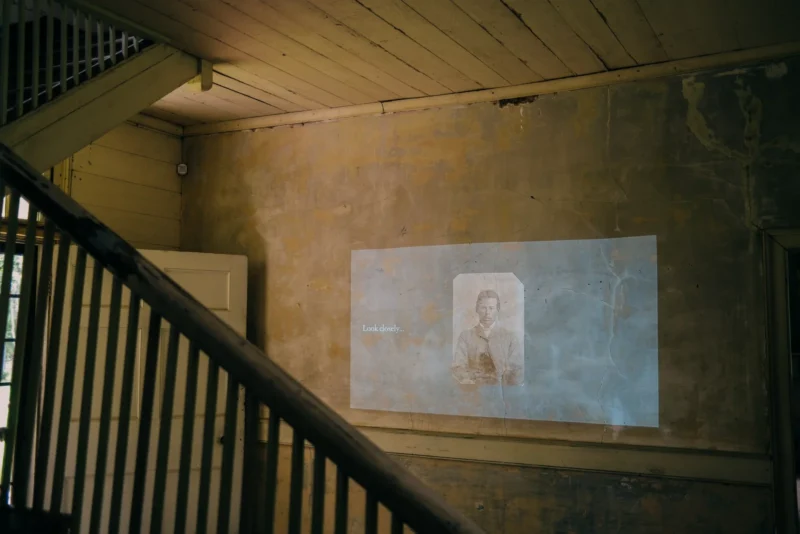
Harpersville is a small town in Alabama.
It’s predominantly white. It’s located in Shelby County, which the local Republican Party calls the reddest county in America. It’s also home to a new museum exhibit about a particular chapter of Black history. About what happened in Harpersville after formerly enslaved people were emancipated, granted their freedom — and not much else.
NPR’s Picture Show spoke with Tyler Jones who is part of a narrative studio based in Birmingham called 1504. They have been collaborating with the Wallace Center for Arts and Reconciliation to recenter the stories of Black descendant communities through creative, embodied storytelling.
With a growing network of designers, historians and local leaders, they are exploring participatory forms of interpretation that invite people to feel, not just understand, the weight of this place.
What inspired you to take on this project, and what did you hope it would achieve? Why was this the right time and place for a reparative history project using art?
Across the South, antebellum sites are often romanticized, obscuring the brutal realities of enslaved labor that made that era — and its wealth — possible. But something remarkable is happening in rural Alabama, where a plantation from 1841 is being reimagined not as a monument to the past, but as a space for reparative history and healing.
At a time when so much public discourse is fractured and politicized, art offers a deeper, more human way in. What better time and place to try connecting with a new generation around the importance of seeing history as the story of our shared humanity?
How did local residents, particularly descendants of both the enslaved and the enslavers, engage with the project? Were there collaborative aspects in the creation of the installation?
[…]
The broader Healing History initiative brought together descendants of enslavers and the enslaved in dialogue to practice honest, often difficult conversation. Those exchanges revealed a deep hunger for acknowledgment and the importance of not minimizing the horrors of racial violence while also not reducing the Black experience to stories of trauma.
Keep reading the interview. You can also get information for visiting.
Learn more about slavery in our online gallery.
More breaking Black news.
Comments Are Welcome
Note: We moderate submissions in order to create a space for meaningful dialogue, a space where museum visitors – adults and youth –– can exchange informed, thoughtful, and relevant comments that add value to our exhibits.
Racial slurs, personal attacks, obscenity, profanity, and SHOUTING do not meet the above standard. Such comments are posted in the exhibit Hateful Speech. Commercial promotions, impersonations, and incoherent comments likewise fail to meet our goals, so will not be posted. Submissions longer than 120 words will be shortened.
See our full Comments Policy here.