103-Year-Old Civil Rights Icon: ‘Thank God I Learned That Color Makes No Difference’
Share
Explore Our Galleries









Breaking News!
Today's news and culture by Black and other reporters in the Black and mainstream media.
Ways to Support ABHM?
By Sasha Bronner, the Huffington Post
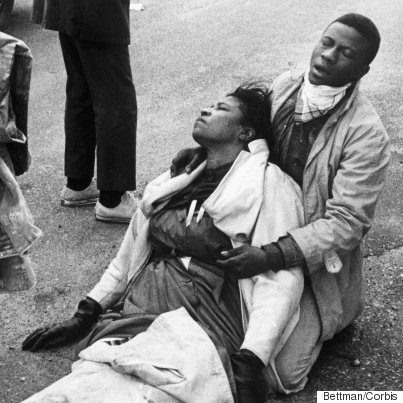
Amelia Boynton Robinson was nearly beaten to death in 1965 during the first march in Selma, Alabama, led by Martin Luther King Jr. She was 53 years old at the time. A graphic photo of Boynton Robinson, severely beaten and collapsed, spread around the world and became an iconic image of the civil rights era.
Boynton Robinson survived the brutality and chaos of the time and is alive today to talk about it, at 103 years old. One of the nation’s oldest civil rights activists, she remains an essential figure of the movement. She was the first woman and first African-American to ever run for Congress in Alabama. Boynton Robinson is portrayed in the movie “Selma,” which she calls “fantastic,” by actress Lorraine Toussaint.
“Thank god I learned that color makes no difference,” Boynton Robinson said Friday at an awards luncheon at the Soho House in West Hollywood, California. “My parents [were] an example for what they wanted their children to be.”
“I look back at the time that we fought and when those heads were beaten,” she said. “I look at what God brought to us. Dr. King cracked the door open. People rose up and felt that they were just as good as everybody else.”
Boynton Robinson wishes that after everything she fought for, the state of race relations were more positive. “People have hate within their souls and that’s what we have to get rid of,” she continued.
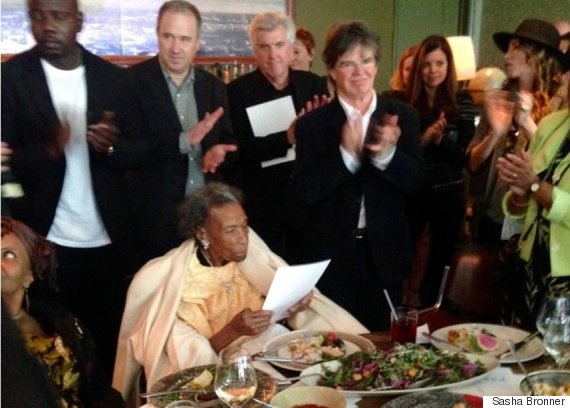
But Boynton Robinson is neither bitter nor disappointed. As she looks back on everything she has seen and experienced, her perspective is positive. “It makes me realize that this is where I belong,” she said.
“This is where God sees me — at this age, at 103 years old — in order that I might be able to reach out and pull [people] up.”
Read the full article here.
Learn more about those who struggled for justice.
Read more Breaking News here.
Comments Are Welcome
Note: We moderate submissions in order to create a space for meaningful dialogue, a space where museum visitors – adults and youth –– can exchange informed, thoughtful, and relevant comments that add value to our exhibits.
Racial slurs, personal attacks, obscenity, profanity, and SHOUTING do not meet the above standard. Such comments are posted in the exhibit Hateful Speech. Commercial promotions, impersonations, and incoherent comments likewise fail to meet our goals, so will not be posted. Submissions longer than 120 words will be shortened.
See our full Comments Policy here.