Wisconsin Supreme Court to hear case about race-based college scholarships
Share
Explore Our Galleries









Breaking News!
Today's news and culture by Black and other reporters in the Black and mainstream media.
Ways to Support ABHM?
Anya van Wagtendonk, NPR
Wisconsin is working out how to comply with a US Supreme Court ruling that significantly curtailed race-based college admissions
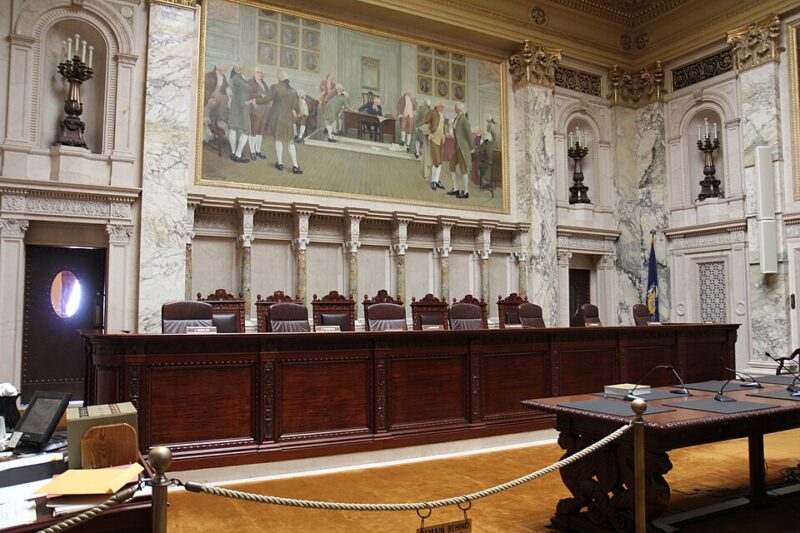

The Wisconsin Supreme Court has elected to hear a case about whether education grants for students of certain ethnic backgrounds are constitutional.
The decision from the high court comes after a state appeals court ruled earlier this year that the grants are discriminatory.
It also comes two years after a U.S. Supreme Court ruling that significantly curtailed race-based college admissions.
Caleb Gerbitz, an attorney at Meissner Tierney Fisher & Nichols in Milwaukee who writes extensively about appellate law, said Wisconsin justices could decide just how broadly the U.S. Supreme Court ruling applies.
“This was an interesting case because it’s a category that’s adjacent to college admissions,” said Gerbitz. “What the U.S. Supreme Court left open … is whether you can consider race in other settings, outside of academia.”
In February, an appeals court ruled that the state-run Minority Undergraduate Retention Grant Program violates the Equal Protection Clause of the U.S. Constitution, by offering taxpayer dollars to low-income students of only some racial or national backgrounds.
Established by the state Legislature in the 1985-87 biennial budget, the grants program is earmarked for students who are Black, American Indian or Hispanic, or Southeast Asian from Laos, Cambodia or Vietnam admitted to the United States after Dec. 31, 1975.
The appeals court ruled the program must end because it uses tax dollars to “discriminate against individuals.”
Discover the history of Black suffrage in Wisconsin, which gave Black residents a say in issues such as public schools and colleges.
Comments Are Welcome
Note: We moderate submissions in order to create a space for meaningful dialogue, a space where museum visitors – adults and youth –– can exchange informed, thoughtful, and relevant comments that add value to our exhibits.
Racial slurs, personal attacks, obscenity, profanity, and SHOUTING do not meet the above standard. Such comments are posted in the exhibit Hateful Speech. Commercial promotions, impersonations, and incoherent comments likewise fail to meet our goals, so will not be posted. Submissions longer than 120 words will be shortened.
See our full Comments Policy here.