Closing the healthcare gap requires embracing innovation
Share
Explore Our Galleries









Breaking News!
Today's news and culture by Black and other reporters in the Black and mainstream media.
Ways to Support ABHM?
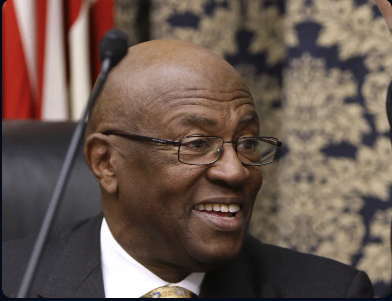
Ed Towns, The Afro
Baltimore tells a story that too many American cities share. In some neighborhoods just miles apart, life expectancy can differ by more than a decade, with predominantly Black communities on the shorter end. Black infants in Baltimore die at more than twice the national rate. Nearly one in eight city babies is born underweight. And in a city that is nearly two-thirds African American, those numbers are not just statistics. They are our neighbors, our cousins, our church families.
Too often, the public conversation around artificial intelligence focuses only on fear. But for communities that have historically been underserved, innovation can also mean opportunity. The real question is not whether we use advanced technology in healthcare. It is whether we use it responsibly and equitably.
Data-driven systems are already helping hospitals save lives in real time. At Tampa General Hospital, clinicians are using Palantir-powered technology to monitor patients for warning signs before infections become life-threatening. As of late 2025, the hospital reported the system had helped save more than 700 lives. Think about what that means for cities like Baltimore and so many others, where emergency rooms are often overwhelmed and warning signs go missed, not because the illness is untreatable, but because the system is stretched too thin.
Read the original article.
Check out ABHM galleries, and exhibits.
Click here for more Breaking news.
Comments Are Welcome
Note: We moderate submissions in order to create a space for meaningful dialogue, a space where museum visitors – adults and youth –– can exchange informed, thoughtful, and relevant comments that add value to our exhibits.
Racial slurs, personal attacks, obscenity, profanity, and SHOUTING do not meet the above standard. Such comments are posted in the exhibit Hateful Speech. Commercial promotions, impersonations, and incoherent comments likewise fail to meet our goals, so will not be posted. Submissions longer than 120 words will be shortened.
See our full Comments Policy here.