Why aren’t flagship universities enrolling more of their own states’ Black students?
Share
Explore Our Galleries









Breaking News!
Today's news and culture by Black and other reporters in the Black and mainstream media.
Ways to Support ABHM?
By Meredith Kolodner, The Hechinger Report
At the University of Georgia, the small percentage of Black students fails to reflect the number of Black high school graduates in the state.
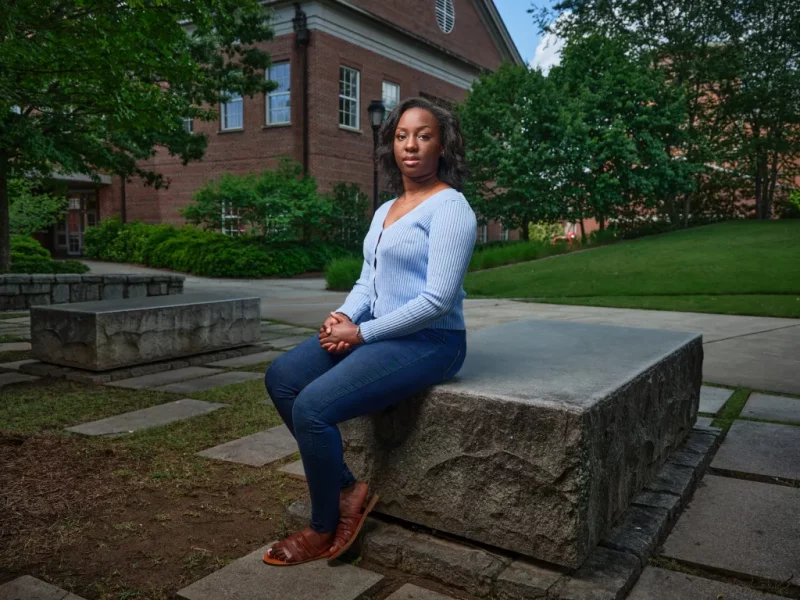
Uchenna Ihekwereme walked to the front row of the 150-person auditorium for a political science class at the University of Georgia. She sat down, as she always did, with her back to the sea of white faces. She had become accustomed to being the only Black student in her classes, but it could still be unsettling.
Her hand went up during a discussion when a student compared the Jan. 6 attack on the Capitol with the Black Lives Matter movement. She was the only one to argue that an effort to violently overturn a valid election was different from protesting against police brutality and racism.
“I didn’t want a false narrative to be pushed about the Black community,” Ihekwereme said.
A junior, she has been the only Black student in close to three-quarters of the courses she has taken and one of a handful in all but one. “It was a total culture shock” after attending a racially diverse high school, she said. “I don’t feel like I’m in danger, but I don’t necessarily feel safe.”
[…]
Such racial disparities may be concentrated in the South, but they are pervasive throughout the country. There are 13 flagship universities where the gap between the percentage of Black students who graduated from public high schools in that state in 2020 and Black freshman enrollment is 10 percentage points or more. And at 30 of these flagship universities, the gap has stayed the same or grown in the last five years.
[…]
“They should be ashamed of themselves,” said Wil Del Pilar, who is the vice president of higher education at The Education Trust, a think tank focused on equity. “Public institutions — they should look like the taxpayers in the state. There’s no way you can say these are representative institutions.”
In contrast, HBCUs have seen increased enrollment.
Stay updated on breaking Black news.
Comments Are Welcome
Note: We moderate submissions in order to create a space for meaningful dialogue, a space where museum visitors – adults and youth –– can exchange informed, thoughtful, and relevant comments that add value to our exhibits.
Racial slurs, personal attacks, obscenity, profanity, and SHOUTING do not meet the above standard. Such comments are posted in the exhibit Hateful Speech. Commercial promotions, impersonations, and incoherent comments likewise fail to meet our goals, so will not be posted. Submissions longer than 120 words will be shortened.
See our full Comments Policy here.