After the rise of BLM, Black students and their families are heading back to HBCUs
Share
Explore Our Galleries









Breaking News!
Today's news and culture by Black and other reporters in the Black and mainstream media.
Ways to Support ABHM?
By Shauneen Miranda, NPR
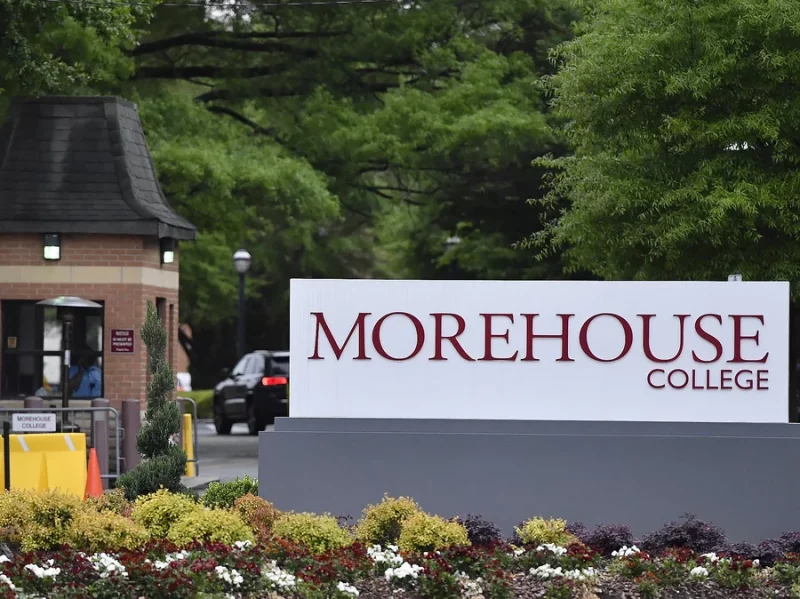
A number of historically Black colleges and universities are seeing an increase in Black students applying and enrolling after years of decline.
“The percentage of Black students enrolled at HBCUs fell from 18 percent in 1976 to 8 percent in 2014 and then increased to 9 percent in 2020,” according to the National Center for Education Statistics. HBCUs such as Morehouse College in Atlanta, Georgia, have seen an increase in applications. At that school, the number went up over 60% in 2020 from the previous year, according to Data USA.
There are a number of factors behind the change — including boosts from famous graduates such as Vice President Harris, an alumna of Howard University — but some Black students and their families see a safer learning environment with these institutions.
Sherrille McKethan-Green, whose son Gideon Green is attending Morehouse, counts herself among them.
“I felt that after he graduated from college, he would have time to be a minority, but at Morehouse, he would be a majority,” she told NPR.
Learn about the history of HBCUs and this present shift.
HCBUs have also seen an influx of threats.
Black culture and community are the focus of ABHM’s breaking news blog.
Comments Are Welcome
Note: We moderate submissions in order to create a space for meaningful dialogue, a space where museum visitors – adults and youth –– can exchange informed, thoughtful, and relevant comments that add value to our exhibits.
Racial slurs, personal attacks, obscenity, profanity, and SHOUTING do not meet the above standard. Such comments are posted in the exhibit Hateful Speech. Commercial promotions, impersonations, and incoherent comments likewise fail to meet our goals, so will not be posted. Submissions longer than 120 words will be shortened.
See our full Comments Policy here.