What’s Happening In Baltimore Didn’t Just Start With Freddie Gray
Share
Explore Our Galleries









Breaking News!
Today's news and culture by Black and other reporters in the Black and mainstream media.
Ways to Support ABHM?
By Simon McCormack, the Huffington Post
This week’s chaos on the streets of Baltimore has been decades in the making.
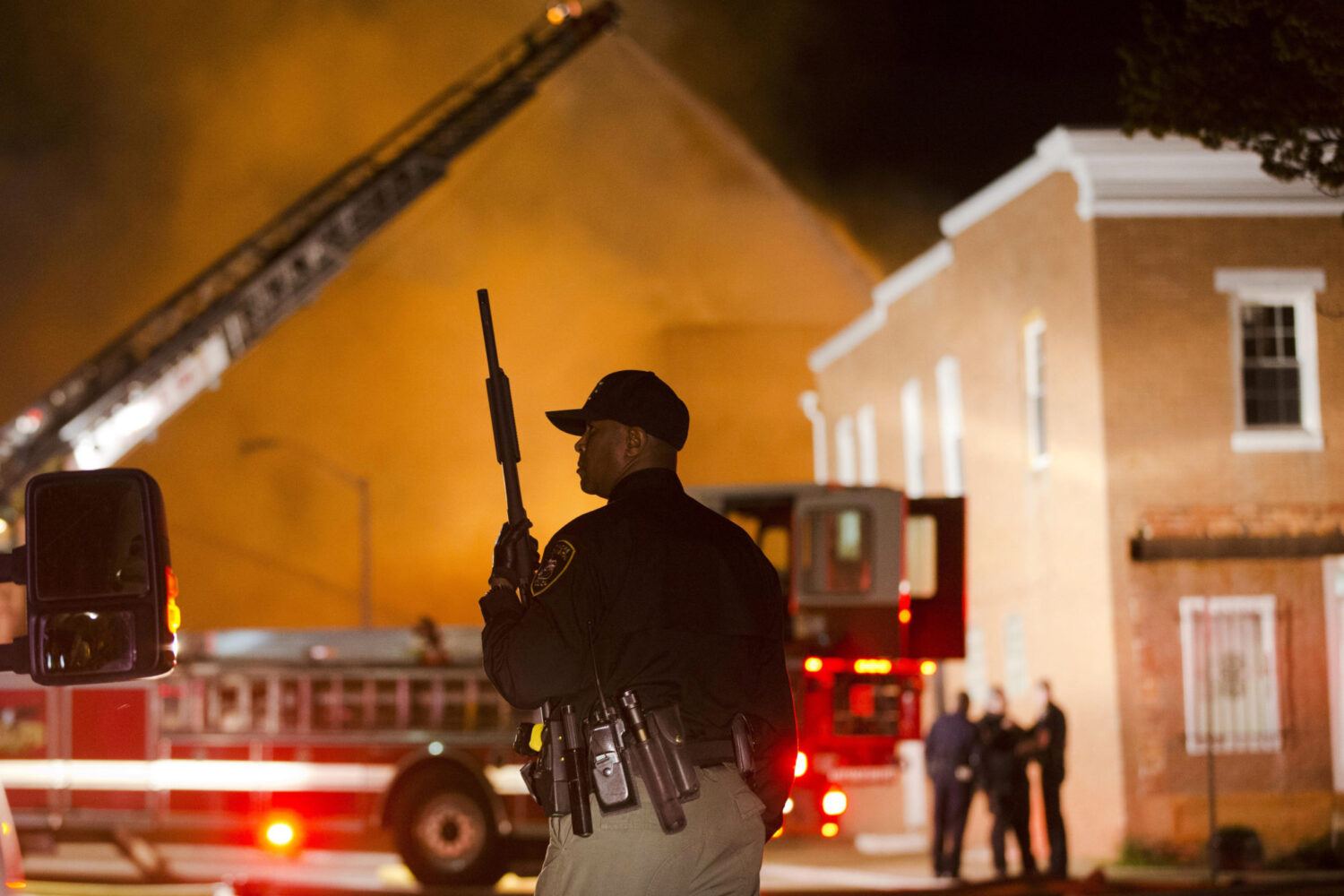
Violence erupted in the city on Monday after days of largely peaceful protests over the death of Freddie Gray, a 25-year-old black man who recently died of injuries he sustained while in police custody. But Gray’s death was just the latest point on a timeline stretching back generations, one that encompasses all manner of racial inequity and human indignity.
On April 6, 1968, just two days after the assassination of Martin Luther King Jr., riots broke out in Baltimore. When the dust settled on April 7, three people were dead, 70 were injured and more than 100 had been arrested, and numerous buildings were burned and destroyed, according to Baltimore magazine.
The Maryland Crime Investigating Commission Report of the Baltimore Civil Disturbance of April 6 to April 11, 1968 later summed up the event in a few sentences that could have easily been written yesterday: “…Our investigation arrives at the clear conclusion that the riot in Baltimore must be attributed to two elements — ‘white racism’ and economic oppression of the Negro…”
The decade following the riots saw significant white flight from Baltimore, as factory jobs in the Rust Belt city dried up. The city lost more than 100,000 manufacturing jobs between 1950 and 1995… they left behind a shrunken tax base and an enervated local economy.
As factory jobs moved overseas, most of the opportunities for employment that replaced them did not pay very well. A 2012 Brookings study found that jobs in low-paying industries like food service grew by more than 60 percent in Baltimore from 1980 to 2007…
In addition to all this, residents of the neighborhood must contend with disproportionate levels of deadly violence. People who live in Sandtown-Winchester and the adjacent Harlem Park neighborhood are “more than twice as likely to be killed than residents of Baltimore overall,” Slate found.
And civilian violence isn’t the only kind rendering these streets unsafe. Between 2011 and September 2014, the city of Baltimore shelled out $5.7 million to cover police brutality lawsuits, according to a Baltimore Sun investigation.
Faced with intractable poverty, high rates of deadly violence and a “poison” relationship between citizens and the police, it’s perhaps not surprising if many Baltimore residents feel like Pierre Thomas, 37, a protester who told NPR this week that calls for “peace” only come when the powerful feel threatened.
“Where was the peace when we were getting shot? Where’s the peace when we were getting laid out? Where is the peace when we are in the back of ambulances? Where is the peace then?” Thomas said. “They don’t want to call for peace then. But you know when people really want peace? When the white people have to get out of bed, when cops have to wear riot gear, when the cops start talking about, oh we got broken arms. Then they want peace.”
“Peace?” Thomas went on. “It’s too late for peace.”
Read the full article here.
Read more Breaking News here.
Comments Are Welcome
Note: We moderate submissions in order to create a space for meaningful dialogue, a space where museum visitors – adults and youth –– can exchange informed, thoughtful, and relevant comments that add value to our exhibits.
Racial slurs, personal attacks, obscenity, profanity, and SHOUTING do not meet the above standard. Such comments are posted in the exhibit Hateful Speech. Commercial promotions, impersonations, and incoherent comments likewise fail to meet our goals, so will not be posted. Submissions longer than 120 words will be shortened.
See our full Comments Policy here.