What Was the 2nd Middle Passage?
Share
Explore Our Galleries









Breaking News!
Today's news and culture by Black and other reporters in the Black and mainstream media.
Ways to Support ABHM?
By Henry Louis Gates Jr., theRoot
A second forced migration of slaves wasn’t transatlantic.
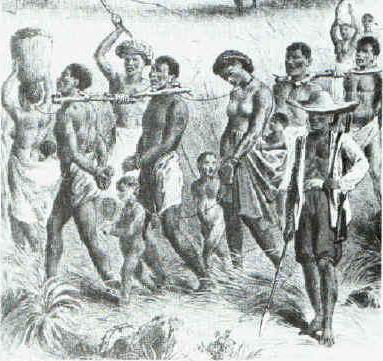
Thanks to the Trans-Atlantic Slave Trade Database, edited by David Eltis and David Richardson, we know that about 388,000 Africans were transported directly to the United States over the course of the slave trade, which ended officially in 1808. This brutally cruel and disruptive phase of the trade, as all American schoolchildren should be taught, is known as “the Middle Passage.” But what is often left out of many survey courses is the second Middle Passage, and that dark chapter in American history involved far more black people than were taken from Africa to the United States. It was also uniquely cruel and brutally destructive. And it unfolded during the era when cotton was “king.”
That second forced migration was known as the domestic, or internal, slave trade: “In the seven decades between the ratification of the Constitution [in 1787] and the Civil War [1861],” the historian Walter Johnson tells us in his book Soul by Soul: Life Inside the Antebellum Slave Market, “approximately one million enslaved people were relocated from the upper South to the lower Sout […] two thirds of these through […] the domestic slave trade.” In other words, two and a half times more African Americans were directly affected by the second Middle Passage than the first one.
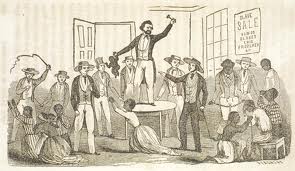
When we think of the image of slaves being sold “down the river” on auction blocks — mothers separated from children, husbands from wives — it was during this period that these scenes became increasingly common. The enslaved were sometimes marched hundreds of miles to their destinations, on foot and in chains. Indeed, the years between 1830 and 1860 were the worst in the history of African-American enslavement.
Why? Because…
Read the full story here.
Learn more about the Middle Passage.
Read more Breaking News here.
Comments Are Welcome
Note: We moderate submissions in order to create a space for meaningful dialogue, a space where museum visitors – adults and youth –– can exchange informed, thoughtful, and relevant comments that add value to our exhibits.
Racial slurs, personal attacks, obscenity, profanity, and SHOUTING do not meet the above standard. Such comments are posted in the exhibit Hateful Speech. Commercial promotions, impersonations, and incoherent comments likewise fail to meet our goals, so will not be posted. Submissions longer than 120 words will be shortened.
See our full Comments Policy here.
Thank you for your great work. I am a Co-Convener of the Martin Luther King Commemoration Committee in Seattle. Can we us the pictures for our Black History Month Program.
[…] The Second Middle Passage occurred from the ratification of the U.S. Constitution in 1787 until the start of the Civil War in 1861. Enslaved peoples were relocated from the upper South to the lower South to work in the fields as the cotton industry spread. […]