U.S. to Release 6,000 Inmates From Prisons
Share
Explore Our Galleries









Breaking News!
Today's news and culture by Black and other reporters in the Black and mainstream media.
Ways to Support ABHM?
By Michael S. Schmidt, the New York Times
The Justice Department is preparing to release roughly 6,000 inmates from federal prisons starting at the end of this month as part of an effort to ease overcrowding and roll back the harsh penalties given to nonviolent drug dealers in the 1980s and ’90s, according to federal law enforcement officials.
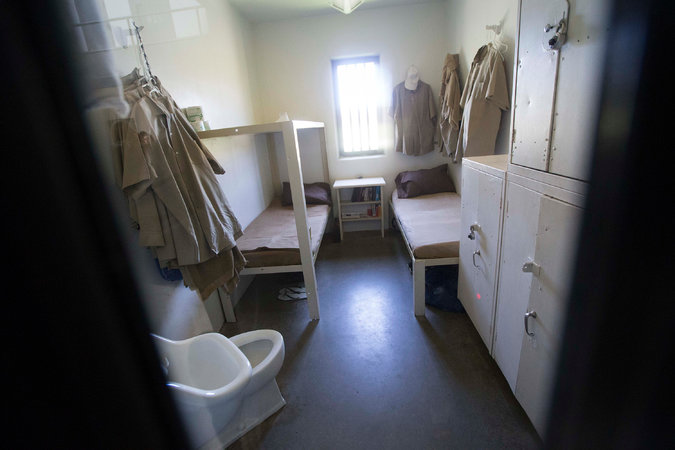
About a third of the inmates are undocumented immigrants who will be deported…
The release will be one of the largest discharges of inmates from federal prisons in American history. It coincides with an intensifying bipartisan effort to ease the mass incarcerations that followed decades of tough sentencing for drug offenses — like dealing crack cocaine — which have taken a particularly harsh toll on minority communities.
“Today’s announcement is nothing short of thrilling because it carries justice,” said Jesselyn McCurdy, a senior legislative counsel at the American Civil Liberties Union. “Far too many people have lost years of their lives to draconian sentencing laws born of the failed drug war. People of color have had to bear the brunt of these misguided and cruel policies. We are overjoyed that some of the people so wronged will get their freedom back.”
While news of the early releases was widely praised, it raised some concerns among law enforcement officials across the country who are grappling with an increase in homicides. Their fear is that many of the freed convicts will be unable to get jobs and will return to crime…
In April 2014, the United States Sentencing Commission reduced the penalties for many nonviolent drug crimes. That summer it said those guidelines could be applied retroactively to many prisoners serving long drug sentences. Eric H. Holder Jr., the attorney general at the time, had lobbied the sentencing commission to make the changes.
Under the new guidelines, prisoners can ask federal judges to reassess their sentences. Along with examining the inmates’ behavior in prison, the judges look at whether they are likely to act out violently if they are released.
As part of an effort to give the federal Bureau of Prisons time to prepare for an influx of convicts entering probation and re-entry programs, the releases were delayed. They will now take place from Oct. 30 to Nov. 2.
[…]
The United States has a quarter of the world’s prison population, and Republican and Democratic lawmakers agree that prison spending, which accounts for a third of the Justice Department’s budget, needs to be reduced.
Read the full article here.
Read more Breaking News here.
Comments Are Welcome
Note: We moderate submissions in order to create a space for meaningful dialogue, a space where museum visitors – adults and youth –– can exchange informed, thoughtful, and relevant comments that add value to our exhibits.
Racial slurs, personal attacks, obscenity, profanity, and SHOUTING do not meet the above standard. Such comments are posted in the exhibit Hateful Speech. Commercial promotions, impersonations, and incoherent comments likewise fail to meet our goals, so will not be posted. Submissions longer than 120 words will be shortened.
See our full Comments Policy here.