Trump’s claims about Haitians draw from a centuries-long narrative. These women explain why.
Share
Explore Our Galleries









Breaking News!
Today's news and culture by Black and other reporters in the Black and mainstream media.
Ways to Support ABHM?
By Nadra Nittle, The 19th News
The former president’s debunked comments that Haitian immigrants are eating household pets in Springfield, Ohio, is just the latest in a long history of smears against them, experts say.
[…]
The targeting of Haitians in the smalltown Midwest has led to an outcry of support from the public, policymakers and immigration advocates. The National Parents Union, a woman-led organization made up of parent advocacy groups fighting for equity in education, criticized “the reckless and irresponsible comments” from Republican leaders and announced that it “stand[s] with the families of Springfield” in a statement on Friday.
But no one empathizes with Springfield’s Haitian community like Haitian Americans themselves, they say. The 19th spoke with scholars and immigrant advocates, mostly women of Haitian heritage, about the repercussions of Trump’s words. They contend that his claim — and the hate before and after it — are nothing new: Due to the unique ways race, religion and resistance have intersected in Haiti’s history, immigrants from the Caribbean nation have experienced a specific brand of xenophobia in the United States, even as Black immigrants in this country lack visibility.
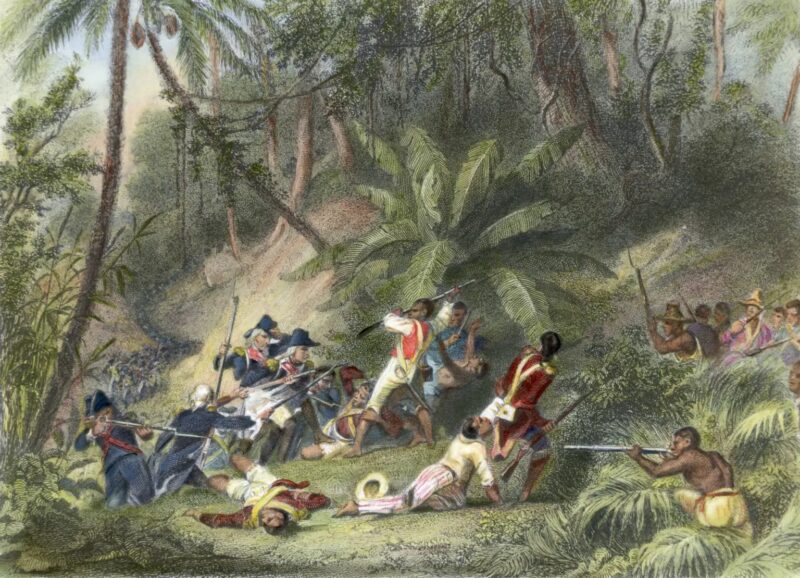
“This kind of narrative has been going on since at least the middle of the 19th century,” said Danielle N. Boaz, professor of Africana Studies at the University of North Carolina at Charlotte. “We can connect all of this back to the thing that Haitians did that was unforgivable to people of European heritage, which is they had this . . . rebellion that started in the 1790s and culminated in what historians have sometimes called the only successful slave rebellion in history, where they were able to defeat not only the French but other foreign powers.”
The 1804 creation of Saint-Domingue, later Haiti, left slaveholding societies terrified that the human beings they held in bondage would also rebel. For securing their freedom, Haitians were demonized, with the Vodou religion often used to make wild claims against them, Boaz said.
“So, over the years, the narrative just kind of increases about how Haiti is this barbaric place,” she said. “It’s run only by Black people.”
Trump reinforced the barbarism messaging by implying Thursday that Haitians are “savage criminal aliens.”
Read more from Haitian-Americans on the history of immigration and xenophobia.
Check out our virtual exhibit about Nat Turner’s Rebellion to learn how enslaved Americans also
revolted like the Haitians did against the French.
See also an exhibit on the Freedmen of Wisconsin and their struggles and triumphs as new settlers of the North.
More on Trump’s Haitian pet eater claim.
Follow more Breaking News here.
Comments Are Welcome
Note: We moderate submissions in order to create a space for meaningful dialogue, a space where museum visitors – adults and youth –– can exchange informed, thoughtful, and relevant comments that add value to our exhibits.
Racial slurs, personal attacks, obscenity, profanity, and SHOUTING do not meet the above standard. Such comments are posted in the exhibit Hateful Speech. Commercial promotions, impersonations, and incoherent comments likewise fail to meet our goals, so will not be posted. Submissions longer than 120 words will be shortened.
See our full Comments Policy here.