Alumni Interviewers Say Harvard’s Ban on Mentioning Race Has Created Confusion in Write-Ups
Share
Explore Our Galleries









Breaking News!
Today's news and culture by Black and other reporters in the Black and mainstream media.
Ways to Support ABHM?
By Celine Muir and Alexa M. Schmitt, Crimson Staff Writers
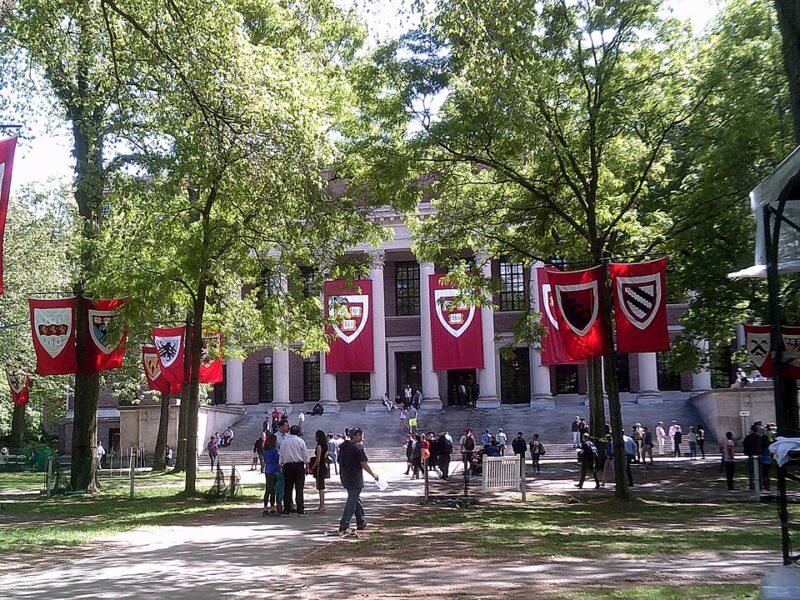
Alumni interviewers said Harvard College’s policy barring them from mentioning applicants’ race or national origin in their written reports has created confusion over what they can include in their evaluations — and made it harder to capture the full picture of applicants’ lives.
The policy, announced last fall and codified in the alumni interviewer handbook, bars interviewers from naming applicants’ religions, languages spoken, or racial and cultural organizations in their reports — requiring them instead to use vague terms like “affinity groups” or “faith events.” Reports that include prohibited details risk being discarded.
The changes have already drawn criticism from civil rights groups and legal scholars who say the policy goes far beyond what the Supreme Court’s 2023 ruling in Students for Fair Admissions v. Harvard requires. In December, the NAACP Legal Defense and Educational Fund called the guidance “unlawful and discriminatory” in a letter to University President Alan M. Garber ’76, arguing it may violate Title VI of the Civil Rights Act.
The Crimson spoke to more than a dozen alumni interviewers about how the policy has played out in practice. Interviewers said they could still represent the substance of students’ experiences, but many said the required generalizations flattened the nuances of applicants’ backgrounds.
At least eight interviewers said applicants brought up race or national origin without any prompting, and three said they were asked after submitting their reports to edit them to remove references to applicants’ national origin.
The Crimson has more details.
Discover Black history in our online galleries.
Comments Are Welcome
Note: We moderate submissions in order to create a space for meaningful dialogue, a space where museum visitors – adults and youth –– can exchange informed, thoughtful, and relevant comments that add value to our exhibits.
Racial slurs, personal attacks, obscenity, profanity, and SHOUTING do not meet the above standard. Such comments are posted in the exhibit Hateful Speech. Commercial promotions, impersonations, and incoherent comments likewise fail to meet our goals, so will not be posted. Submissions longer than 120 words will be shortened.
See our full Comments Policy here.