A film honors America’s first self-governed town founded by formerly enslaved people
Share
Explore Our Galleries









Breaking News!
Today's news and culture by Black and other reporters in the Black and mainstream media.
Ways to Support ABHM?
Adria R Walker, The guardian
The Spirit We Move With explores the legacy of Mitchelville on Hilton Head Island and its Gullah Geechee community
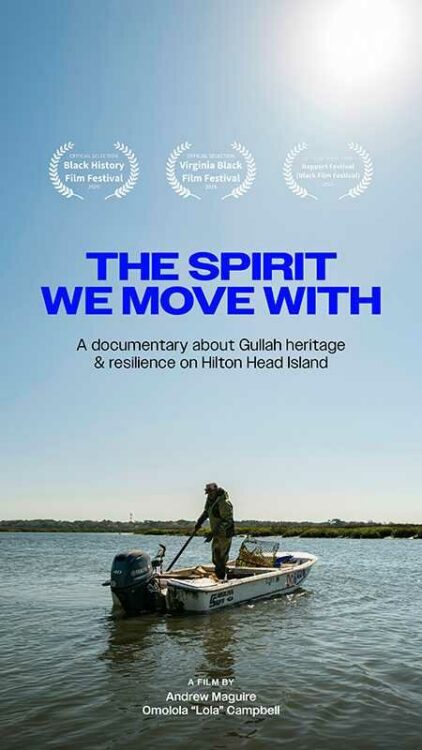
In 1862, while the American civil war spread across the country, formerly enslaved people on Hilton Head Island in South Carolina were imagining a new future and envisioning new possibilities. They began organizing themselves and eventually created the first self-governed, autonomous city for freed people. It was called Mitchelville, named for the Union army Maj Gen Ormsby Mitchel, who led what would become known as the Port Royal Experiment, a model for how the country might transition away from slavery that served as a precursor to the Reconstruction period.
The freed people, who would come to be known as the Gullah Geechee, built their own homes, elected their own officials, created their own economy and, for the first time in US history, mandated education for their children. Each individual made their own decisions, from what they would wear, to whom they would see, to where they would go – decisions that they were prevented from making when they were kept in bondage.
The Spirit We Move With, a new documentary set on Hilton Head Island, explores the story of the historic Mitchelville and its connection to Gullah Geechee descendants today. The film underscores the notion that Gullah Geechee people don’t just have a past; they are also the pioneers of their future. While their history is a central theme of the film, the Gullah people and families who are featured in the short ensure that viewers come away understanding their resiliency and their continued impact on the island they have called home for generations.
The short, directed by Andrew Maguire and executive-produced by Lola Campbell, who is also featured in the film, was developed by the island’s Gullah community and made in partnership with the Hilton Head Island-Bluffton chamber of commerce. After premiering in early February at Mitchelville Freedom Park, the film will be shown in festivals, including the Rapport festival in Brixton, London, on 28 March.
For Campbell, a sixth-generation Hilton Head native islander whose family traces its ancestry back to an enslaved person who was brought to the island around 1820, the documentary is valuable to outsiders and to Gullah Geechee people themselves.
See the trailer:
Comments Are Welcome
Note: We moderate submissions in order to create a space for meaningful dialogue, a space where museum visitors – adults and youth –– can exchange informed, thoughtful, and relevant comments that add value to our exhibits.
Racial slurs, personal attacks, obscenity, profanity, and SHOUTING do not meet the above standard. Such comments are posted in the exhibit Hateful Speech. Commercial promotions, impersonations, and incoherent comments likewise fail to meet our goals, so will not be posted. Submissions longer than 120 words will be shortened.
See our full Comments Policy here.