Bernard LaFayette, civil rights leader who helped launch Voting Rights Act, dies aged 85
Share
Explore Our Galleries









Breaking News!
Today's news and culture by Black and other reporters in the Black and mainstream media.
Ways to Support ABHM?
Travis Oller, Associated Press
Early in a life of service, LaFayette did the risky groundwork for the voter registration campaign in Selma, Alabama
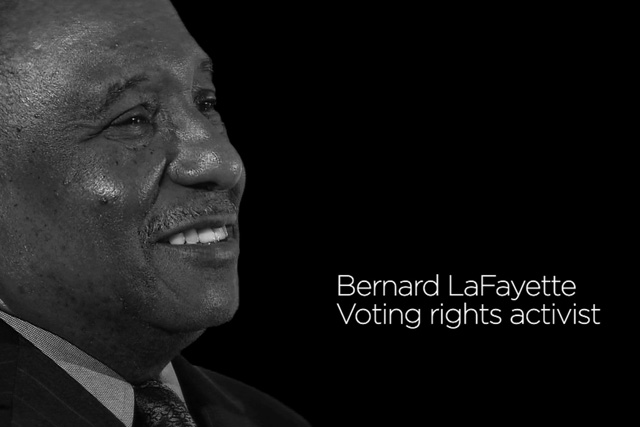
Bernard LaFayette, the advance man who did the risky groundwork for the voter registration campaign in Selma, Alabama, that culminated in the passage of the Voting Rights Act of 1965, has died.
Bernard LaFayette, III, said his father died Thursday morning of a heart attack. He was 85.
On March 7, 1965, the beating of future congressman John Lewis and voting rights marchers on Selma’s Edmund Pettus Bridge led the evening news, shocking the nation’s conscience and pushing Congress to act. But two years before “Bloody Sunday,” it was LaFayette who quietly set the stage for Selma and the advances in voting rights that would follow.
LaFayette was one of a delegation of Nashville students who in 1960 had helped found the Student Nonviolent Coordinating Committee, which organized desegregation and voting rights campaigns across the South. SNCC crossed Selma off its map after some initial scouting determined “the white folks were too mean and the Black folks were too scared,” LaFayette said.
But he insisted on trying anyway. Named director of the Alabama Voter Registration Campaign in 1963, LaFayette moved to the town and, with his former wife Colia Liddell, gradually built the leadership capacity of the local people, convincing them change was possible and creating momentum that could not be stopped.
Check out our exhibit about Bernard Lafayette, An Unsung Veteran of the Voting Rights Struggle
Comments Are Welcome
Note: We moderate submissions in order to create a space for meaningful dialogue, a space where museum visitors – adults and youth –– can exchange informed, thoughtful, and relevant comments that add value to our exhibits.
Racial slurs, personal attacks, obscenity, profanity, and SHOUTING do not meet the above standard. Such comments are posted in the exhibit Hateful Speech. Commercial promotions, impersonations, and incoherent comments likewise fail to meet our goals, so will not be posted. Submissions longer than 120 words will be shortened.
See our full Comments Policy here.