Toni Morrison obituary
Share
Explore Our Galleries









Breaking News!
Today's news and culture by Black and other reporters in the Black and mainstream media.
Ways to Support ABHM?
By Lynn Innes, theguardian.com
Nobel prizewinner and author whose stories have a strong historical and cultural base and a style, structure and tone that is specifically African American
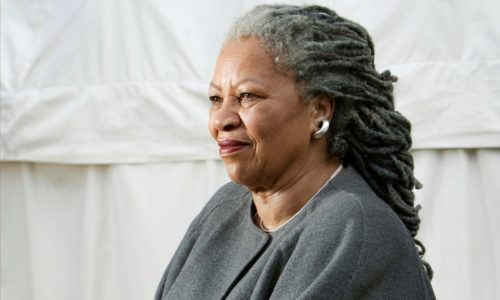
Toni Morrison: ‘Narrative is radical, creating us at the very moment it is being created.’ Photograph: Murdo Macleod/The Guardian
Toni Morrison, who has died aged 88, was the only African American writer and one of the few women to have received the Nobel prize for literature. The announcement of her 1993 award cited her as a writer “who, in novels characterised by visionary force and poetic import, gives life to an essential aspect of American reality”. TIn her acceptance speech Morrison emphasised the importance of language “partly as a system, partly as a living thing over which one has control, but mostly as an agency – as an act with consequences”.
She expressed her own credo, and indicated the core preoccupations of her fiction, in the fable at the heart of her speech, where she imagines young people telling an old black woman: “Narrative is radical, creating us at the very moment it is being created … For our sakes and yours forget your name in the street; tell us what the world has been to you in the dark places and in the light … Tell us what it is to be a woman so that we may know what it is to be a man. What moves at the margin. What it is to have no home in this place. To be set adrift from the one you knew. What it is to live at the edge of towns that cannot bear your company.”
She expressed her own credo, and indicated the core preoccupations of her fiction, in the fable at the heart of her speech, where she imagines young people telling an old black woman: “Narrative is radical, creating us at the very moment it is being created … For our sakes and yours forget your name in the street; tell us what the world has been to you in the dark places and in the light … Tell us what it is to be a woman so that we may know what it is to be a man. What moves at the margin. What it is to have no home in this place. To be set adrift from the one you knew. What it is to live at the edge of towns that cannot bear your company…”
Read full article here
More about Toni Morrison here and here
More Breaking News here
View more ABHM galleries here
Comments Are Welcome
Note: We moderate submissions in order to create a space for meaningful dialogue, a space where museum visitors – adults and youth –– can exchange informed, thoughtful, and relevant comments that add value to our exhibits.
Racial slurs, personal attacks, obscenity, profanity, and SHOUTING do not meet the above standard. Such comments are posted in the exhibit Hateful Speech. Commercial promotions, impersonations, and incoherent comments likewise fail to meet our goals, so will not be posted. Submissions longer than 120 words will be shortened.
See our full Comments Policy here.