“Good” School, or Failing One: Black Parents’ Impossible Choice
Share
Explore Our Galleries









Breaking News!
Today's news and culture by Black and other reporters in the Black and mainstream media.
Ways to Support ABHM?
Ameshia Cross, Word in Black
For three generations, my family has wrestled with the same question: How long do you wait for a system that isn’t giving your child what they need?
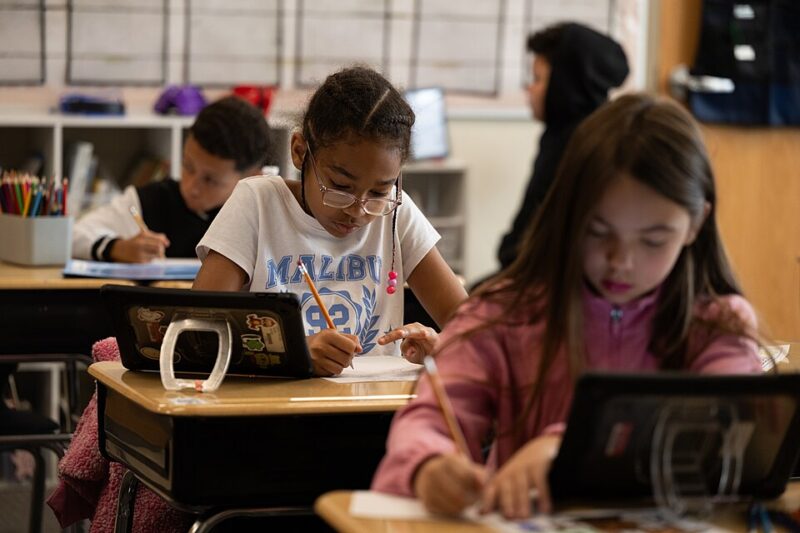
I haven’t stopped thinking about Nikole Hannah-Jones’s recent essay in The New York Times Magazine and the questions it raises about Black parents, public education, and the choices we make for our own children.
My grandparents attended segregated schools in Jim Crow-era Mississippi. My Nana only made it through sixth grade. My Granddaddy, a sharecropper, made it through ninth.
They relocated to Chicago in the 1950s, heeding the call of The Chicago Defender newspaper and countless Black churches urging Black Southerners to join The Great Migration for safety from the KKK and better opportunities for themselves and their children. Granddaddy worked in the steel mills; when my mom was born in the 1960s, he was determined that his only child would go further in school than he and my Nana.
So, he worked two jobs to send her to private Catholic school from kindergarten through 12th grade. He didn’t trust the public school system — particularly the neighborhood school — to give her the education he knew she deserved.
When I look back at the data on the public school my mom would have attended, my Granddaddy had reason to worry: the school’s math and reading scores were low. Maybe my mom would’ve been the exception. Maybe not. But he wasn’t risking it with his only child.
Fast-forward a generation. My mom had four kids. She couldn’t afford to send us all to private school, and she didn’t particularly want to. She hated her Catholic school experience.
So, we went to public school.
By first grade, I was struggling to read. Instead of giving me the tools and support I needed, my teacher wanted me to repeat the grade. My mother refused; she knew it wouldn’t fix the fact that they hadn’t taught me to read.
Read the full article here.
ABHM has an exhibit on the Rosenwald Schools and their part in the long history of Black education. The Exhibit Echoes of Equality features a painting of Ruby Bridges by Daron Wolf.
Comments Are Welcome
Note: We moderate submissions in order to create a space for meaningful dialogue, a space where museum visitors – adults and youth –– can exchange informed, thoughtful, and relevant comments that add value to our exhibits.
Racial slurs, personal attacks, obscenity, profanity, and SHOUTING do not meet the above standard. Such comments are posted in the exhibit Hateful Speech. Commercial promotions, impersonations, and incoherent comments likewise fail to meet our goals, so will not be posted. Submissions longer than 120 words will be shortened.
See our full Comments Policy here.