Milwaukee Museum Returns Pots by Enslaved Artist David Drake to Family
Share
Explore Our Galleries









Breaking News!
Today's news and culture by Black and other reporters in the Black and mainstream media.
Ways to Support ABHM?
Jori Finkel, New york Times
The museum restituted two of Drake’s stoneware jars to his heirs, but has found a way to keep both on display. It joins a growing number of institutions that are returning his work to his heirs.
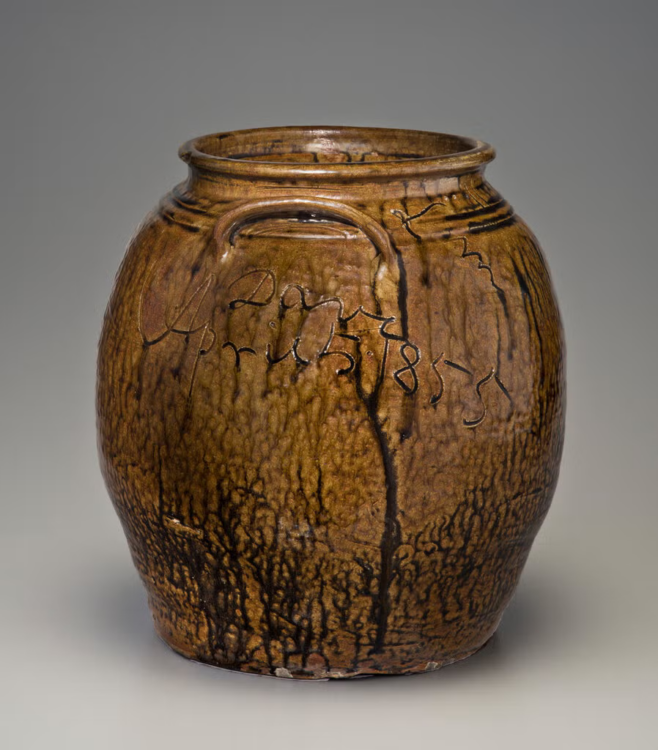
The Milwaukee Art Museum is expected to announce on Monday that it has returned two historic jars in its collection by the enslaved artist David Drake to his descendants. In doing so, it joins a growing list of museum and private collections turning over Drake’s work to family members, who have been on a quest to reconnect with their heritage.
Drake made and inscribed ambitious stoneware jars while enslaved in South Carolina in the 1800s, despite punishing conditions and anti-literacy laws that prevented teaching enslaved persons to read.
The Milwaukee Art Museum subsequently bought back one of the restituted jars, signed “Dave” and dated 1855, for an undisclosed price. This arrangement was inspired by a similar restitution agreement in 2025 reached by the Museum of Fine Arts, Boston and the descendants of Drake.
The second returned vessel, larger but unsigned, will remain at the Milwaukee museum on loan from the family.
“The museum was a great partner to work with,” said Yaba Baker, Drake’s great-great-great-great grandson, who serves as the family spokesman. “We’re excited about the fact that they’re not just acquiring a pot but developing school programs to extend the Dave story,” he added, describing an educational initiative in its early stages.
Head to the original article to learn how the Milwaukee Art Museum shed light on Drake’s work.
Discover new Black artists in our galleries.
Comments Are Welcome
Note: We moderate submissions in order to create a space for meaningful dialogue, a space where museum visitors – adults and youth –– can exchange informed, thoughtful, and relevant comments that add value to our exhibits.
Racial slurs, personal attacks, obscenity, profanity, and SHOUTING do not meet the above standard. Such comments are posted in the exhibit Hateful Speech. Commercial promotions, impersonations, and incoherent comments likewise fail to meet our goals, so will not be posted. Submissions longer than 120 words will be shortened.
See our full Comments Policy here.