This Father’s Day, Let’s Shatter the Myth About the Absent Black Father
Share
Explore Our Galleries









Breaking News!
Today's news and culture by Black and other reporters in the Black and mainstream media.
Ways to Support ABHM?
By Kirsten West Savali, theRoot
Fact: More young black fathers are raising their children at home than are not. If you’re surprised, keep reading.
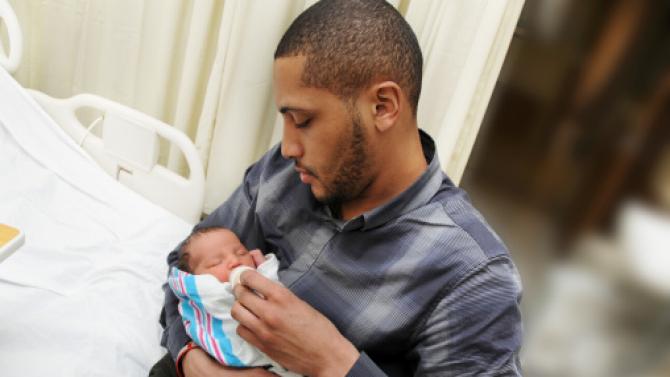
Black men are present and engaged fathers who love their children.
Black men are present and engaged fathers who love their children.
I needed to write that twice, in hopes that it cuts through the racist and patently false narrative amplified by mainstream media that the majority of black fathers are scurrilous beings who are locked up and tuned out, low on education and high on weed—too busy getting busy to get a business of their own…
“People think they don’t care, but we know they do,” said Joseph Jones, president of the Center for Urban Families, an organization that works to support African-American fathers, to the Los Angeles Times. “We see how dads are fighting against the odds to be engaged in the lives of their children.”
In 2013 the Centers for Disease Control and Prevention released a study that I’ve cited often over the years, “Fathers’ Involvement With Their Children: United States, 2006-2010” (pdf). It does a great job shattering some pervasive myths about African-American fathers. The findings include the fact that more African-American fathers live with their children (2.5 million) than live apart from their children (1.7 million).
Of African-American fathers surveyed who live with their children,
- 78.2 percent fed or ate meals with their children daily, compared with 73.9 percent of white fathers;
- 70.4 percent bathed, diapered or dressed their children daily, compared with 60.0 percent of white fathers;
- 82.2 percent played with their children daily, compared with 82.7 percent of white fathers;
- 34.9 percent read to their children daily, compared with 24.9 percent of white fathers;
- 40.6 percent helped their children with their homework or checked to make sure that they finished it daily, compared with 29.3 percent of white fathers.
* Of the fathers who live away from their children, African-American fathers outperformed white and Latino fathers on nearly all measures surveyed, including reading to their children daily, helping them with homework and changing their diapers.
Read the full article here.
Read more Breaking News here.
Comments Are Welcome
Note: We moderate submissions in order to create a space for meaningful dialogue, a space where museum visitors – adults and youth –– can exchange informed, thoughtful, and relevant comments that add value to our exhibits.
Racial slurs, personal attacks, obscenity, profanity, and SHOUTING do not meet the above standard. Such comments are posted in the exhibit Hateful Speech. Commercial promotions, impersonations, and incoherent comments likewise fail to meet our goals, so will not be posted. Submissions longer than 120 words will be shortened.
See our full Comments Policy here.