This Alabama Cattle Rancher Is Ready for a Legal Battle to Protect His Land
Share
Explore Our Galleries









Breaking News!
Today's news and culture by Black and other reporters in the Black and mainstream media.
Ways to Support ABHM?
by Aallyah Wright, Capital B
In Selma, Alabama, Willie Palmer Jr. is suing his white neighbor and others, alleging trespassing and a conspiracy to take his land.
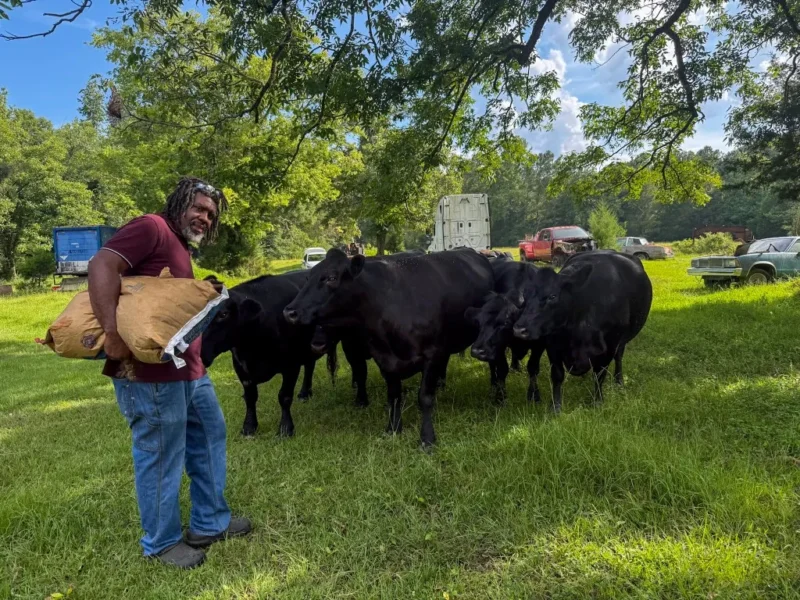
SELMA, Alabama — On a sunny, humid summer afternoon, Willie Palmer Jr. gathered his cows under a tree for feeding time. He watched as they roamed the grounds, passing by a slew of vehicles, a shed, and barn on his 20-acre property.
As the animals feasted, Palmer stood quietly for a moment, taking in the soft buzz of the insects around him. He then walked across the grass, gesturing toward the mullein plant, and old pear, fig, and black walnut trees.
He even paused to inspect a small cactus plant.
Palmer takes pride in caring for the farm in Selma, Alabama. It’s been his life since 2017, the year he says he inherited his family’s land, which has been passed down for generations.
For the past year, the 50-year-old has been working overtime to protect it. On most days, Palmer splits his time wrangling his cattle and hauling loads as a truck driver. But deep into the night and well into early morning, he pored over legal documents and the deeds to his property, after he says he found a railroad worker utilizing his property without permission.
This encounter prompted the cattle rancher to conduct more thorough research to answer a crucial question: Who has the right to a portion of his acreage that has been in his family since 1945?
Palmer’s fight isn’t an isolated incident. Across the South, Black landowners are challenging the pressures of private development and asserting their rights to retain their land.
Learn how Palmer is ready to prove his ownership.
Discover the lesser-known history of Black cowboys in the US.
Comments Are Welcome
Note: We moderate submissions in order to create a space for meaningful dialogue, a space where museum visitors – adults and youth –– can exchange informed, thoughtful, and relevant comments that add value to our exhibits.
Racial slurs, personal attacks, obscenity, profanity, and SHOUTING do not meet the above standard. Such comments are posted in the exhibit Hateful Speech. Commercial promotions, impersonations, and incoherent comments likewise fail to meet our goals, so will not be posted. Submissions longer than 120 words will be shortened.
See our full Comments Policy here.