U.S. Votes No as UN Calls Slave Trade ‘Gravest Crime’ and Backs Reparations
Share
Explore Our Galleries









Breaking News!
Today's news and culture by Black and other reporters in the Black and mainstream media.
Ways to Support ABHM?
Adam Mahoney, Capital B
Global leaders are moving toward reparations, but U.S. opposition leaves Black Americans fighting that battle largely on their own.
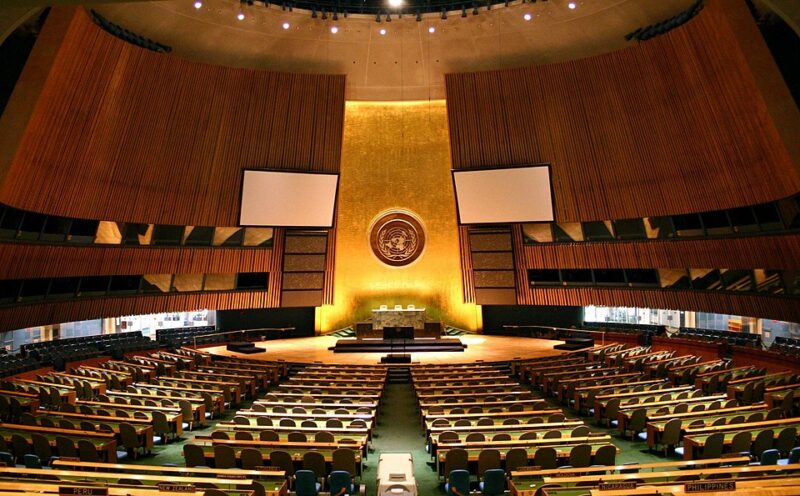

The United States joined Israel and Argentina on Thursday in voting against a Ghana-led resolution that declared the transatlantic trafficking of enslaved Africans the “gravest crime against humanity” and urged countries to pursue reparations.
The nonbinding measure, backed by more than 120 nations, calls for formal apologies, compensation, and other forms of reparatory justice for people of African descent worldwide. The measure explicitly links centuries of slavery to today’s anti-Black racism and economic inequality.
Washington’s refusal to support it puts the U.S. at odds with much of the Global South and with Black reparations advocates at home, who see the vote as a rare opening for global accountability on slavery’s enduring harms and a test of U.S. leaders’ stated commitments to racial justice.
CapitalB includes a quote from the US Ambassador.
Some American states and cities have considered or implemented reparations.
Comments Are Welcome
Note: We moderate submissions in order to create a space for meaningful dialogue, a space where museum visitors – adults and youth –– can exchange informed, thoughtful, and relevant comments that add value to our exhibits.
Racial slurs, personal attacks, obscenity, profanity, and SHOUTING do not meet the above standard. Such comments are posted in the exhibit Hateful Speech. Commercial promotions, impersonations, and incoherent comments likewise fail to meet our goals, so will not be posted. Submissions longer than 120 words will be shortened.
See our full Comments Policy here.