Special News Series: Rising Up For Justice! – Nigeria’s #EndSARS protesters draw inspiration from BLM movement
Share
Explore Our Galleries









Breaking News!
Today's news and culture by Black and other reporters in the Black and mainstream media.
Ways to Support ABHM?
Introduction To This Series:
This post is one installment in an ongoing news series: a “living history” of the current national and international uprising for justice.
Today’s movement descends directly from the many earlier civil rights struggles against repeated injustices and race-based violence, including the killing of unarmed Black people. The posts in this series serve as a timeline of the uprising that began on May 26, 2020, the day after a Minneapolis police officer killed an unarmed Black man, George Floyd, by kneeling on his neck. The viral video of Floyd’s torturous suffocation brought unprecedented national awareness to the ongoing demand to truly make Black Lives Matter in this country.
The posts in this series focus on stories of the particular killings that have spurred the current uprising and on the protests taking place around the USA and across the globe. Sadly, thousands of people have lost their lives to systemic racial, gender, sexuality, judicial, and economic injustice. The few whose names are listed here represent the countless others lost before and since. Likewise, we can report but a few of the countless demonstrations for justice now taking place in our major cities, small towns, and suburbs.
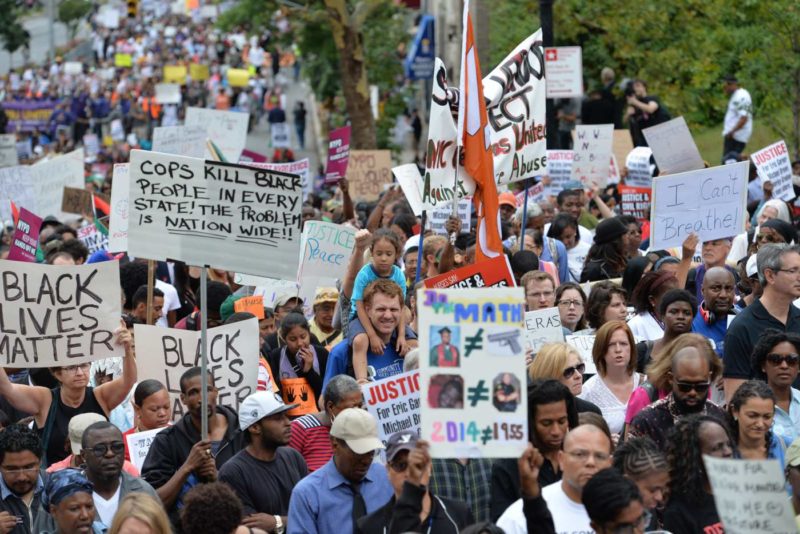
To view the entire series of Rising Up for Justice! posts, insert “rising up” in the search bar above.
Nigeria’s #EndSARS protesters draw inspiration from Black Lives Matter movement
By Philip Obaji Jr., Special for USA Today
October 26, 2020
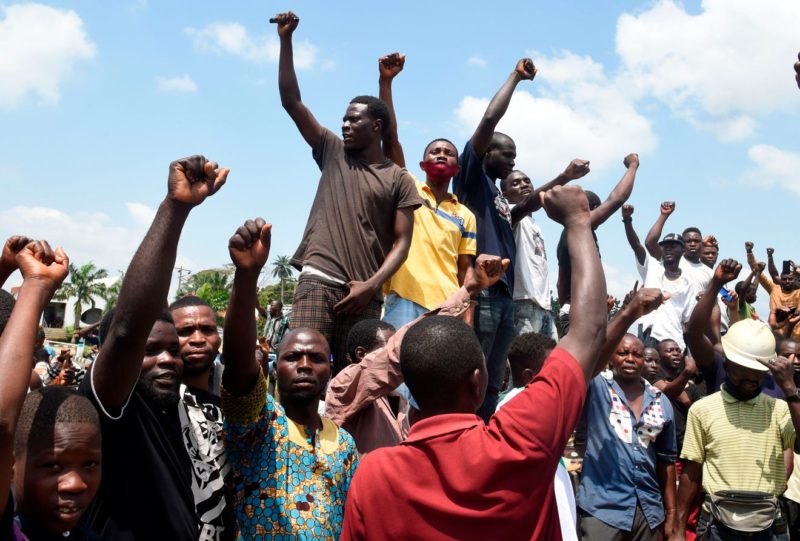
PIUS UTOMI EKPEI, AFP via Getty Images
ABUJA, Nigeria — For weeks, young Nigerians rallying behind the hashtag #EndSARS have filled the streets of major cities across Nigeria demanding the dissolution of the Special Anti-Robbery Squad (SARS), a police unit that has in recent years been publicly criticized for extortion of citizens, kidnappings, extrajudicial killings and illegal arrests.
The protesters are expressing deep anger at the aggression of the police unit and their campaign has drawn support from Nigerians in the diaspora, as hundreds have also marched in cities like Toronto, Paris, London and New York.
The demonstrations, which harken to the Black Lives Matter movement in the United States, have drawn massive support from the international community especially the U.S., where celebrities such as Beyoncé, Rihanna and Kanye West have joined BLM activists, including one of the movement’s co-founders Opal Tometi, in expressing their support for #EndSARS…
President Muhammadu Buhari announced the disbandment of the police squad on Oct. 12, the #EndSARS campaigners’ biggest achievement to date. Buhari has said 51 civilians have been killed in the protests, along with 11 police officers and seven soldiers.
Many protesters, inspired by BLM to expand the scope of the campaign, are calling for full systemic reform of the police, punishment of officers guilty of brutality and compensation for SARS victims. Protests in the two countries carry the same message: The killing of citizens by police officers with impunity should never be allowed to happen in a free country.
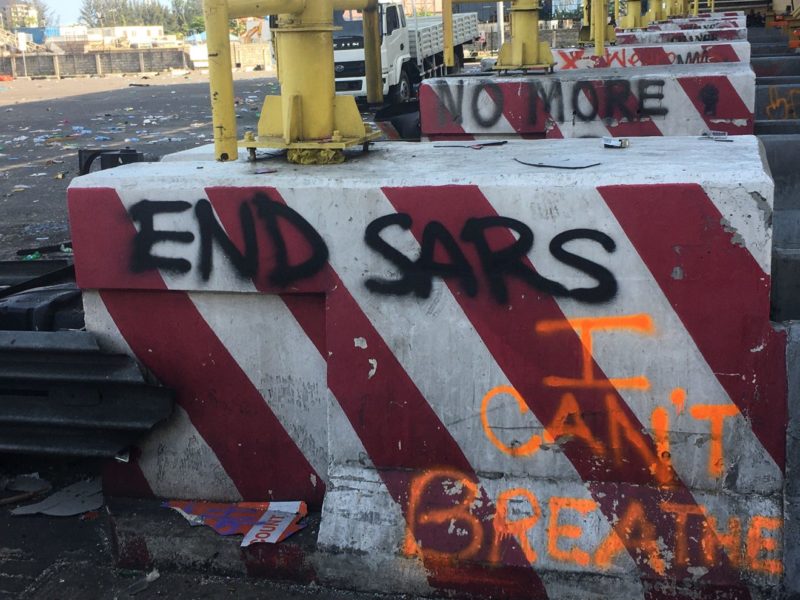
Read the full article here.
More Breaking News here.
Explore the ABHM galleries here.
Comments Are Welcome
Note: We moderate submissions in order to create a space for meaningful dialogue, a space where museum visitors – adults and youth –– can exchange informed, thoughtful, and relevant comments that add value to our exhibits.
Racial slurs, personal attacks, obscenity, profanity, and SHOUTING do not meet the above standard. Such comments are posted in the exhibit Hateful Speech. Commercial promotions, impersonations, and incoherent comments likewise fail to meet our goals, so will not be posted. Submissions longer than 120 words will be shortened.
See our full Comments Policy here.