Special News Series: Rising Up for Justice! – Know Their Names
Share
Explore Our Galleries









Breaking News!
Today's news and culture by Black and other reporters in the Black and mainstream media.
Ways to Support ABHM?
Introduction to this series:
This post is one installment in an ongoing news series: a “living history” of the current national and international uprising for justice.
Today’s movement descends directly from the many earlier civil rights struggles against repeated injustices and race-based violence, including the killing of unarmed Black people. The posts in this series serve as a timeline of the uprising that began on May 26, 2020, the day after a Minneapolis police officer killed an unarmed Black man, George Floyd, by kneeling on his neck. The viral video of Floyd’s torturous suffocation brought unprecedented national awareness to the ongoing demand to truly make Black Lives Matter in this country.
The posts in this series focus on stories of the particular killings that have spurred the current uprising and on the protests taking place around the USA and across the globe. Sadly, thousands of people have lost their lives to systemic racial, gender, sexuality, judicial, and economic injustice. The few whose names are listed here represent the countless others lost before and since. Likewise, we can report but a few of the countless demonstrations for justice now taking place in our major cities, small towns, and suburbs.
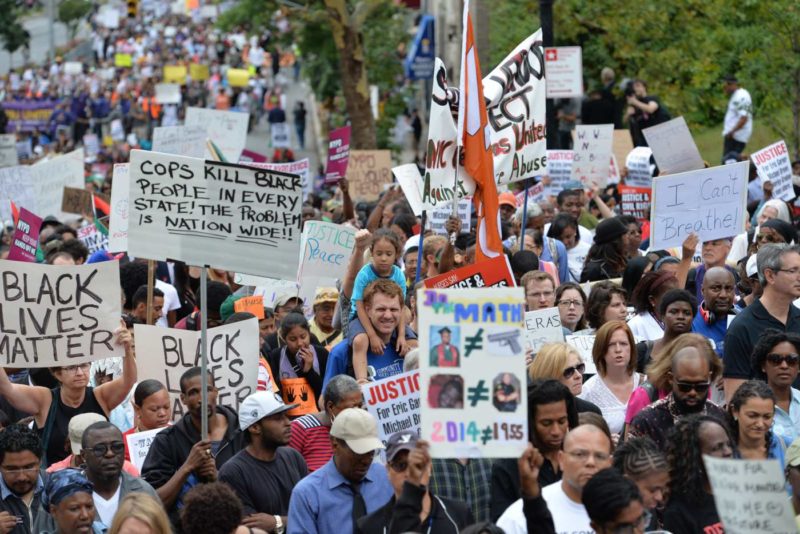
To view the entire series of Rising Up for Justice! posts, insert “rising up” in the search bar above.
Know Their Names: People whose deaths by police spurred this Uprising
August 24, 2019: Elijah McClain
Elijah McClain, a 23-year-old man, was murdered by the Aurora, Colorado police while returning home from a convenience store. As he walked, McClain listened to music and wore a ski mask due to his anemia. A passerby called 911 on McClain, even though “they did not believe anyone was in danger.”
Police arrived and stopped him. McClain asked them to leave him alone, explaining that he is “an introvert… [and to] please respect my boundaries.” The officers threw Elijah against the wall, then the ground and applied a carotid control hold around his neck. McClain pleaded with them to let him go, that he was innocent and unarmed. At one point, officers even told one another to point their body cameras away from the struggle. McClain was handcuffed and given a large ketamine injection.
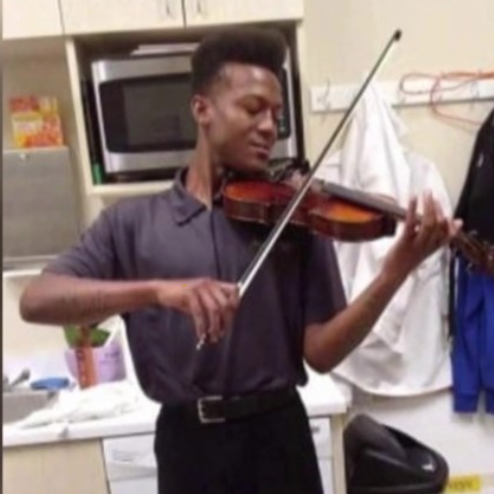
As a result, McClain suffered heart attacks and was taken to the hospital. Elijah was pronounced brain dead and taken off life support on August 30, 2019. Elijah’s killers walked free.
February 23, 2020: Ahmaud Arbery
Ahmaud Arbery, a 25- year-old man, was fatally shot while jogging in the Satilla Shores neighborhood near Brunswick on the Georgia coast.
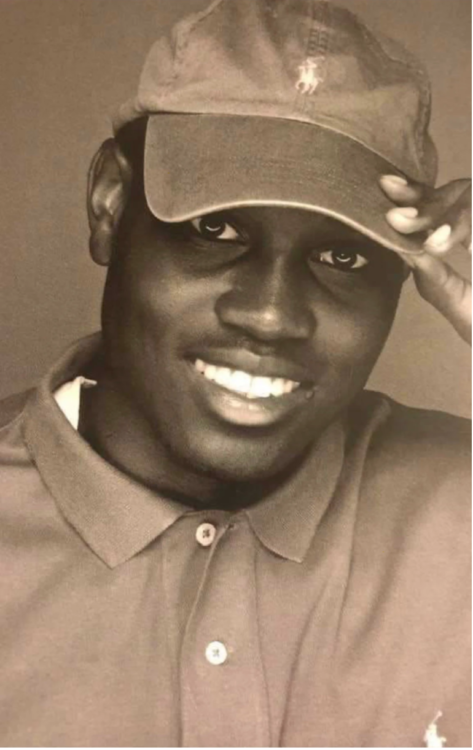
Arbery stopped jogging by a construction site and may have entered, then exited, the partially constructed house, possibly to to get water. Local resident, Gregory McMichael, and his son Travis McMichael armed themselves with a pistol and shotgun and chased Arbery in a pick up truck. A third resident, William “Roddie” Bryan, also followed Arbery in his vehicle, trapping him on the road. Bryan then video-recorded a confrontation in which Arbery and Travis struggle for control of Travis’ shotgun. Shots are fired. Arbery tries to run but collapses, wounded, to the ground. The video ends.
Aubery died of his wounds. Gregory McMichal called the police and claimed Arbery looked like a suspect of a series of break-ins. According to a police report, Travis rolled over the limp body “to see if the male had a weapon.” There was blood on the younger McMichael’s hands when the police arrived. Neither of the McMichaels nor Bryan were arrested or charged.
March 13, 2020: Breonna Taylor
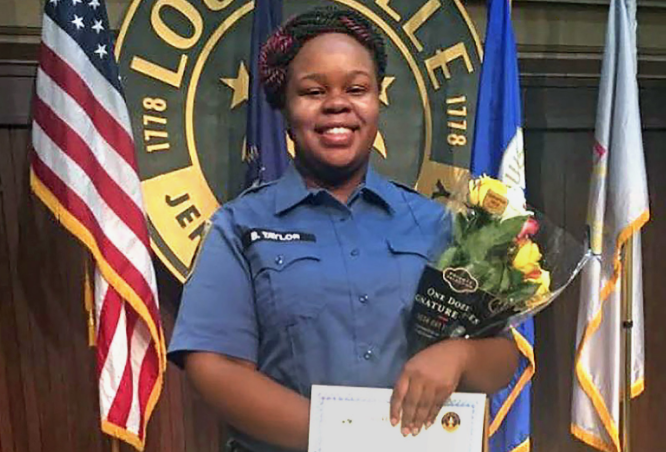
Breonna Taylor, a 26-year-old woman and EMT (Emergency Medical Technician), was fatally shot after midnight in her own bed by three plainclothes police officers. The officers executed a no-knock warrant and broke into her apartment in Louisville, Kentucky.
The police believed the home Breonna shared with her boyfriend Kenneth Walker was linked to two drug dealers who they thought were receiving mail there.
After they repeatedly asked who it was, their door was forced open with a battering ram. Walker, a licensed gun owner, believed they were being attacked by armed intruders. He fired his gun, injuring one of the plainclothes officers in the leg. The officers proceeded to shoot over 20 rounds into their home. Taylor was shot at least 8 times and died at the scene. No drugs were found in the apartment. Breonna Taylor’s killers were reassigned to administrative duties pending investigation.
May 25, 2019: George Floyd
George Floyd, a 46-year-old man, was suffocated to death in Minneapolis, Minnesota.
Police were called after Floyd was believed to have presented a counterfeit $20 bill at a grocery store. Four officers – Derek Chauvin, J. Alexander Kueng, Thomas Lane, and Tou Thao – arrived on the scene. The officers pulled Floyd from his parked SUV, handcuffed him, and walked him to a police car.
Floyd told the officers he was recovering from the coronavirus, suffered from anxiety and claustrophobia. He asked not to be put in the patrol car, offering instead to lie on the ground. They put him in the vehicle, then pulled him across the seat and out again. He fell to the ground face down.
While two other officers held him down, Officer Chauvin proceeded to kneel on Floyd’s neck for 8 minutes and 46 seconds. Floyd repeatedly said he could not breathe and pleaded for his life. Witnesses video-recorded the incident, and several repeatedly tried to intervene, asking Chauvin to take his knee off Floyd’s neck. Officer Chauvin continued to kneel on Floyd’s neck after he was still and quiet and for a minute beyond the arrival of an ambulance. Paramedics on the way to hospital found him pulseless, and Mr. Floyd was pronounced dead in the emergency room.
The next day the Minneapolis Police Department first placed the four officers on administrative leave, then fired them later that day. That same day, people gathered and created a memorial for George Floyd outside the store where he was killed. They brought placards reading “I Can’t Breathe” and “Black Lives Matter.” Hundreds then marched to the 3rd District Police Station, initiating the first of thousands of protests to come in quick succession around the country and the world.
Comments Are Welcome
Note: We moderate submissions in order to create a space for meaningful dialogue, a space where museum visitors – adults and youth –– can exchange informed, thoughtful, and relevant comments that add value to our exhibits.
Racial slurs, personal attacks, obscenity, profanity, and SHOUTING do not meet the above standard. Such comments are posted in the exhibit Hateful Speech. Commercial promotions, impersonations, and incoherent comments likewise fail to meet our goals, so will not be posted. Submissions longer than 120 words will be shortened.
See our full Comments Policy here.