Q&A: Designing the set for ‘Why Race Matters’
Share
Explore Our Galleries









Breaking News!
Today's news and culture by Black and other reporters in the Black and mainstream media.
Ways to Support ABHM?
By Ian Lewitz, PBS Wisconsin
Why Race Matters, a digital series elevating issues of importance affecting Wisconsin’s Black communities, returned to PBS Wisconsin this fall with four all-new episodes.
Host and producer Angela Fitzgerald connects in conversation with everyday people whose work and commitments center on race, identity and achieving racial equity in the state. The program shares the layered, lived experiences of Black people in Wisconsin, exploring topics simultaneously historic and urgent — offering hope, guidance and resources to thrive.
The new season is available to stream on whyracematters.org and on the free PBS Video App, streaming devices and Smart TVs.
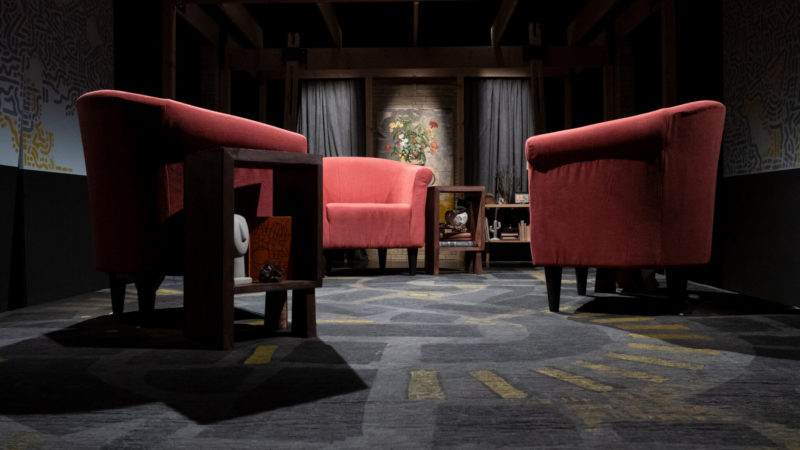
Cailin Short is an Environment Designer and Interactive Producer at PBS Wisconsin with more than 15 years of experience in theater and now television. In addition to leading the set design and building for our major events like Garden & Landscape Expo, along with other station productions, Short played a lead role constructing and designing the set for the second season of Why Race Matters.
Short also spearheaded a collaboration with Wisconsin artist Mike Lroy in the development of a number of key artistic elements that were featured in the Why Race Matters set. Watch the video and read the Q&A below to learn more about Lroy’s involvement and work in the set design process.
PBS Wisconsin: When you were first approached to design the set for Why Race Matters Race, what were some of the conversations you had early on with the production team for the second season?
Cailin Short: Angela really wanted it to feel intimate, but they also wanted it to be a studio production. She wanted it to feel like you were in someone’s living room, essentially, because they are really often difficult conversations, and they can be charged. So, wanting the space to feel as intimate as possible was a high priority for Angela and myself.
Read the rest of the interview.
PBS has long provided educational topics about content such as segregation, racial heritage, being Black and outdoorsy, and activists.
You’ll find stories about PBS shows in the news section.
Comments Are Welcome
Note: We moderate submissions in order to create a space for meaningful dialogue, a space where museum visitors – adults and youth –– can exchange informed, thoughtful, and relevant comments that add value to our exhibits.
Racial slurs, personal attacks, obscenity, profanity, and SHOUTING do not meet the above standard. Such comments are posted in the exhibit Hateful Speech. Commercial promotions, impersonations, and incoherent comments likewise fail to meet our goals, so will not be posted. Submissions longer than 120 words will be shortened.
See our full Comments Policy here.