Project reveals UK sites where black Americans fought to end slavery
Share
Explore Our Galleries









Breaking News!
Today's news and culture by Black and other reporters in the Black and mainstream media.
Ways to Support ABHM?
By Chris Osuh, The Guardian
Missing Pieces Project maps buildings in 189 locations where African American abolitionists spoke against slavery
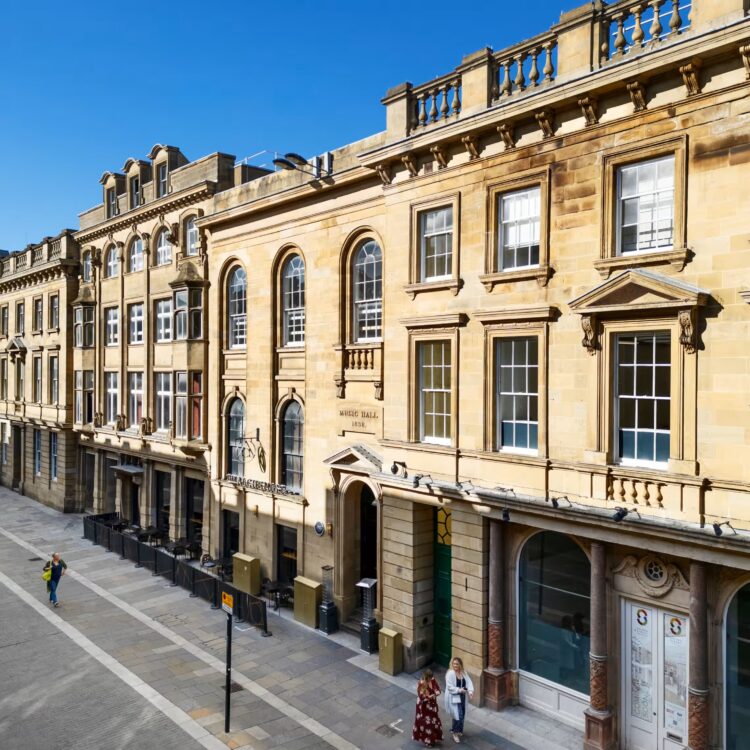
Historic England is commemorating the American abolitionist Frederick Douglass’s time in Newcastle in a project that links the legacy of black abolitionists with listed buildings.
The story of how black Americans came to Britain to fight slavery has still not been fully recognised. The Missing Pieces Project aims to shed new light on the struggle by charting the locations on the lecture tours of 19th-century activists.
In church halls, factories and theatres across Britain, Christians, workers, radicals and liberals came to hear African American abolitionists talk and show solidarity with the cause. Now, buildings in 189 cities, towns and villages have been added to Historic England’s Missing Pieces Project, which uncovers overlooked stories behind historic sites with an interactive online map.
Douglass, a writer, reformer, orator and a seminal figure in American civil rights who escaped enslavement, travelled to Britain and Ireland three times. Among the buildings Douglass visited was the music hall at Nelson Street, Newcastle, which, testifying to Tyneside’s radical past, was also visited by the activists William Wells Brown, William Craft, Henry Highland Garnet and Moses Roper.
Buckingham Palace is on the map – having been visited by the “Black Swan”, the singer and activist Elizabeth Taylor Greenfield, who performed for Queen Victoria in 1854. Greenfield was born in enslavement and worked with British aristocrats to end slavery.
[…]
The project reveals that the fight against American slavery was not confined to urban centres. Moses Roper went from Cornwall to the Scottish Highlands, resolving to “tell the truth” of the system’s brutality, with his autobiography selling thousands of copies in Welsh. His lectures at Wattisham Baptist chapel, Suffolk, on tours between 1838 and 1844, are charted on the Missing Pieces Project map.
The Guardian has more information.
Read one of Douglass’ pieces about American independence during slavery.
Comments Are Welcome
Note: We moderate submissions in order to create a space for meaningful dialogue, a space where museum visitors – adults and youth –– can exchange informed, thoughtful, and relevant comments that add value to our exhibits.
Racial slurs, personal attacks, obscenity, profanity, and SHOUTING do not meet the above standard. Such comments are posted in the exhibit Hateful Speech. Commercial promotions, impersonations, and incoherent comments likewise fail to meet our goals, so will not be posted. Submissions longer than 120 words will be shortened.
See our full Comments Policy here.