For many Black women, the Target boycott is not over. It may never be.
Share
Explore Our Galleries









Breaking News!
Today's news and culture by Black and other reporters in the Black and mainstream media.
Ways to Support ABHM?
Chabeli Carrazana
A faith leader announced the end of a yearlong “Target fast,” but many Black women who helped launch the boycott say the movement wasn’t his to call off.
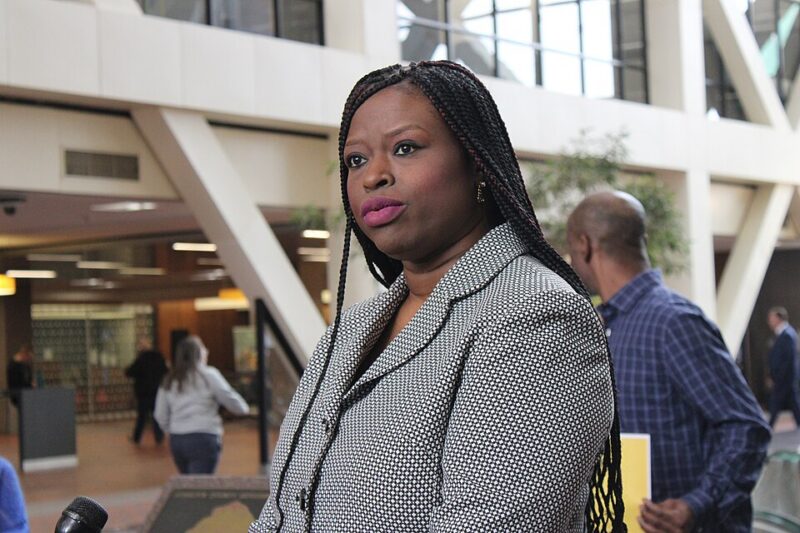

Whatever you may have heard about the Target boycott ending, here’s the truth: The boycott is not over for many Black women. It probably never will be.
A year ago, Black women started the movement to boycott the retail giant after it made a U-turn on its numerous commitments to racial equity — and particularly the Black community. That movement took various forms: Ohio state Sen. Nina Turner called for a national boycott, as did grassroots activists in Minneapolis, where Target is based. Rev. Jamal Harrison Bryant of Atlanta’s New Birth Missionary Baptist Church also launched a 40-day “Target fast” that stretched into nearly 400.
The boycott played a key role in a year of declining sales and profits that forced CEO Brian Cornell to step down. Target’s stock price dropped about 30 percent in 2025.
But this week, just as the Target fast passed the one-year mark, Bryant announced it was over, citing “productive” conversations with the company’s new CEO Michael Fiddelke.
“We have not been able to get all that we have desired, but I am grateful for the strides that we have made. For the Target fast, that really reflects the faith-based component of this, we are claiming victory,” he said at a press conference Wednesday.
His announcement confused many Black women who, for more than a year, have held steady in their conviction to not set foot inside a Target store until the company reversed its retreat on diversity, equity and inclusion, or DEI.
That still has not happened: The company confirmed to USA Today that it’s making no new commitments or reversals on its DEI policy.
Head over to 19th News to see a statement by Target.
Comments Are Welcome
Note: We moderate submissions in order to create a space for meaningful dialogue, a space where museum visitors – adults and youth –– can exchange informed, thoughtful, and relevant comments that add value to our exhibits.
Racial slurs, personal attacks, obscenity, profanity, and SHOUTING do not meet the above standard. Such comments are posted in the exhibit Hateful Speech. Commercial promotions, impersonations, and incoherent comments likewise fail to meet our goals, so will not be posted. Submissions longer than 120 words will be shortened.
See our full Comments Policy here.