Praise and dismay in South Africa over president’s meeting with Trump
Share
Explore Our Galleries









Breaking News!
Today's news and culture by Black and other reporters in the Black and mainstream media.
Ways to Support ABHM?
Betsy Reed, The Guardian
Ramaphosa hailed for keeping his cool in the Oval Office, but some questioned why he would walk into an ambush
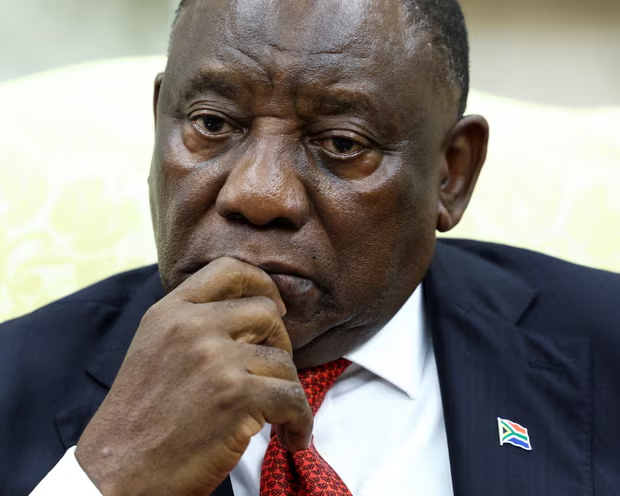
Many South Africans have praised their president, Cyril Ramaphosa, for staying calm when Donald Trump ambushed him in the Oval Office with a video purporting to back up his false claims of a “genocide” against white Afrikaner farmers.
Others asked why Ramaphosa, who brought ministers, golfers and a billionaire with him, chose to walk into what he knew was likely to be a trap.
Before the televised encounter, US-South Africa relations were at a nadir. In February, Trump signed an executive order cutting aid to South Africa, accusing it of “unjust racial discrimination” against Afrikaners, who ruled the country during the apartheid era which repressed the non-white majority.
The order set up a programme to bring Afrikaners to the US as refugees, with the first group arriving earlier this month, while other refugees from war zones were blocked.
“There is criminality in our country,” Ramaphosa told Trump. “People who do get killed, unfortunately through criminal activity, are not only white people. The majority of them are black people.” Trump responded: “The farmers are not black.”
Ramaphosa later returned to Trump’s divisive claims, saying: “These are concerns that we are willing to talk to you about.”
Read more to understand the dismay in the Oval Office.
Links to galleries
Check out our Breaking News section for more Black News
Comments Are Welcome
Note: We moderate submissions in order to create a space for meaningful dialogue, a space where museum visitors – adults and youth –– can exchange informed, thoughtful, and relevant comments that add value to our exhibits.
Racial slurs, personal attacks, obscenity, profanity, and SHOUTING do not meet the above standard. Such comments are posted in the exhibit Hateful Speech. Commercial promotions, impersonations, and incoherent comments likewise fail to meet our goals, so will not be posted. Submissions longer than 120 words will be shortened.
See our full Comments Policy here.