Jerome Smith, Freedom Rider Who Challenged Robert Kennedy, Dies at 87
Share
Explore Our Galleries









Breaking News!
Today's news and culture by Black and other reporters in the Black and mainstream media.
Ways to Support ABHM?
By Penelope Green, New York times
He castigated Robert F. Kennedy for failing to protect civil rights activists, forcing the attorney general to reckon with the depth of Black anger.
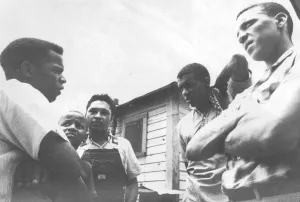
Jerome Smith, who as a young Freedom Rider in 1961 was jailed and beaten for his efforts to desegregate transportation in the South, and who excoriated Attorney General Robert F. Kennedy for not doing enough to protect him and the other riders during that harrowing year, died on Aug. 21 at his home in New Orleans. He was 87.
His daughter Farin Smith said the cause was cancer.
When the first Freedom Riders set forth in early May 1961, Mr. Smith was 21 and had dropped out of Southern University in Baton Rouge, La., to devote himself to the Congress of Racial Equality, the civil rights organization known as CORE.
It had been 15 years since the Supreme Court had ruled that segregated seating on interstate buses was unconstitutional. Yet the Southern states had largely ignored the decision. CORE organized a series of Freedom Rides — beginning with teams of Black and white activists who would travel by bus from Washington to New Orleans — to put the ruling to the test, challenging the federal government to finally enforce it.
Mr. Smith — who was stuck in jail in New Orleans, having been arrested after participating in a lunch-counter sit-in — was unable to join the first ride.
[…]
On May 24, Mr. Smith, finally released from jail, boarded a Greyhound bus in Montgomery, Ala., for a ride to Jackson, Miss., where he was promptly arrested.
Continue reading about Smith’s life.
Learn more about other activists and organizations who fought for equal rights.
Comments Are Welcome
Note: We moderate submissions in order to create a space for meaningful dialogue, a space where museum visitors – adults and youth –– can exchange informed, thoughtful, and relevant comments that add value to our exhibits.
Racial slurs, personal attacks, obscenity, profanity, and SHOUTING do not meet the above standard. Such comments are posted in the exhibit Hateful Speech. Commercial promotions, impersonations, and incoherent comments likewise fail to meet our goals, so will not be posted. Submissions longer than 120 words will be shortened.
See our full Comments Policy here.