It’s a First: Black Voting Rate in 2012 Higher Than White Rate
Share
Explore Our Galleries









Breaking News!
Today's news and culture by Black and other reporters in the Black and mainstream media.
Ways to Support ABHM?
By Hope Yen, Associated Press
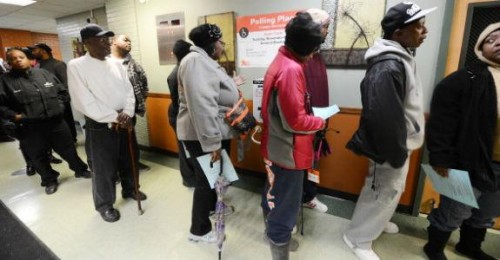
WASHINGTON (AP) — America’s blacks voted at a higher rate than other minority groups in 2012 and by most measures surpassed the white turnout for the first time, reflecting a deeply polarized presidential election in which blacks strongly supported Barack Obama while many whites stayed home.
Had people voted last November at the same rates they did in 2004, when black turnout was below its current historic levels, Republican Mitt Romney would have won narrowly, according to an analysis conducted for The Associated Press.
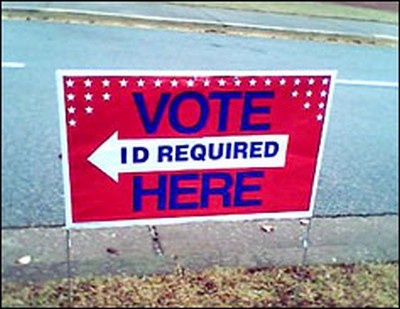
Census data and exit polling show that whites and blacks will remain the two largest racial groups of eligible voters for the next decade. Last year’s heavy black turnout came despite [Editor’s Note: or perhaps because of…?] concerns about the effect of new voter-identification laws on minority voting, outweighed by the desire to re-elect the first black president.
[…]
Overall, the findings represent a tipping point for blacks, who for much of America’s history were disenfranchised and then effectively barred from voting until passage of the Voting Rights Act in 1965.
But the numbers also offer a cautionary note to both Democrats and Republicans after Obama won in November with a historically low percentage of white supporters.
[…]
The 2012 data suggest Romney was a particularly weak GOP candidate, unable to motivate white voters let alone attract significant black or Latino support. Obama’s personal appeal and the slowly improving economy helped overcome doubts and spur record levels of minority voters in a way that may not be easily replicated for Democrats soon.
Romney would have erased Obama’s nearly 5 million-vote victory margin and narrowly won the popular vote if voters had turned out as they did in 2004, according to Frey’s analysis. Then, white turnout was slightly higher and black voting lower.
Read the full article here.
Some politicians try to dilute the power of the Black vote.
Read more Breaking News here.
Comments Are Welcome
Note: We moderate submissions in order to create a space for meaningful dialogue, a space where museum visitors – adults and youth –– can exchange informed, thoughtful, and relevant comments that add value to our exhibits.
Racial slurs, personal attacks, obscenity, profanity, and SHOUTING do not meet the above standard. Such comments are posted in the exhibit Hateful Speech. Commercial promotions, impersonations, and incoherent comments likewise fail to meet our goals, so will not be posted. Submissions longer than 120 words will be shortened.
See our full Comments Policy here.