How America’s Memory of 9/11 Got Whitewashed
Share
Explore Our Galleries









Breaking News!
Today's news and culture by Black and other reporters in the Black and mainstream media.
Ways to Support ABHM?
Joseph Williams, Word in Black
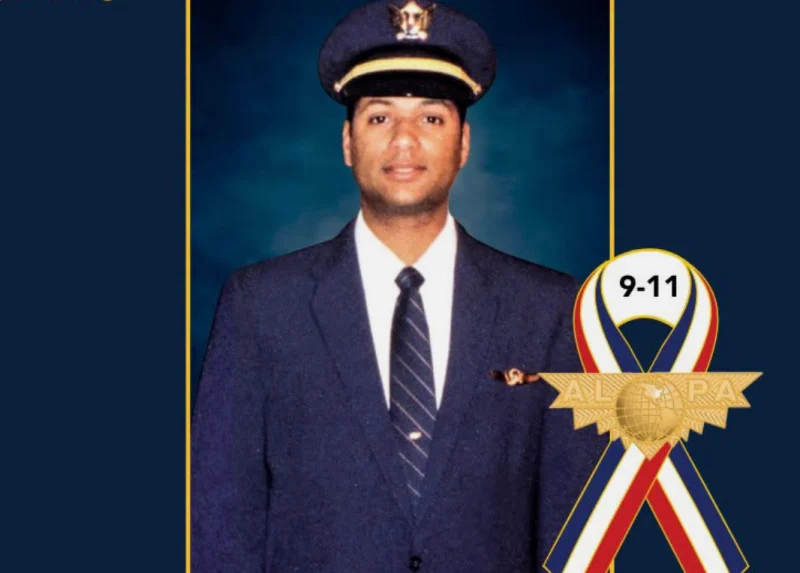
After learning terrorists had flown jetliners full of people into the World Trade Center — and that their own plane had been hijacked for a similar purpose — a group of passengers on United Airlines Flight 93 decided they wouldn’t surrender. Their doomed charge toward the cockpit, Todd Beamer’s rallying cry, “Let’s roll,” became a defining act of American courage.
In the cockpit on that day, however, LeRoy W. Homer Jr. — the first officer of Flight 93, a military veteran, experienced pilot, and a Black man — already was resisting the hijackers.
LEARN MORE: Service and Sacrifice: Remembering Black Men in Uniform Lost on 9/11
Homer was sitting beside Capt. Jason Dahl when terrorists stormed the cockpit on that terrible day. Air traffic controllers heard a desperate transmission, most likely Homer, as the attack began: “Mayday! Hey, get out of here! Get out of here! Get out of here!”
No one knows precisely what happened next. Audio recovered from the flight indicates there was a struggle, and Homer’s family believes he and Dahl were the first people aboard Flight 93 to resist the hijackers. It was just minutes before passengers in the cabin organized the revolt that would become one of the most celebrated stories of 9/11. Overlooked
Overlooked but On the Record
Yet as the nation marks a quarter-century since the worst attack on U.S. soil, we don’t remember or honor Homer’s role, even though the rebellion on Flight 93 was the subject of two feature films. Indeed, it’s hard to find high-profile stories of Black first responders who saved lives, or heroically sacrificed their own, on 9/11.
It’s almost as if the infamous day has been whitewashed — metaphorically if not literally.
To be sure, the historical record includes Black people in photographs, on casualty lists, and in official histories of Sept. 11. They worked in the World Trade Center and the Pentagon. They were aboard all four of the airplanes. Black firefighters, police officers, paramedics, and other first responders ran toward the danger. Twelve Black New York City firefighters died at the World Trade Center.
Nevertheless, when someone says “9/11,” our collective national memory and popular culture conjure up a familiar set of images and storylines. Office workers fleeing Manhattan beneath clouds of ash. New York City Mayor Rudy Giuliani striding through the rubble. Beamer fearlessly organizing passengers aboard Flight 93. Mostly white firefighters raising the American flag at Ground Zero.
The original article details the lives lost by at least 24 Black first responders and other Black victims on 9/11.
Discover how Black first responders deal with grief, even years later.
Comments Are Welcome
Note: We moderate submissions in order to create a space for meaningful dialogue, a space where museum visitors – adults and youth –– can exchange informed, thoughtful, and relevant comments that add value to our exhibits.
Racial slurs, personal attacks, obscenity, profanity, and SHOUTING do not meet the above standard. Such comments are posted in the exhibit Hateful Speech. Commercial promotions, impersonations, and incoherent comments likewise fail to meet our goals, so will not be posted. Submissions longer than 120 words will be shortened.
See our full Comments Policy here.