What Does Labor Day Mean When America Still Owes a Debt for Centuries of Stolen Black Labor?
Share
Explore Our Galleries









Breaking News!
Today's news and culture by Black and other reporters in the Black and mainstream media.
Ways to Support ABHM?
Nehemiah D. Frank, The Black Wall Street Times
America celebrates the dignity of work every Labor Day, but its debt to generations of Black workers remains unsettled.
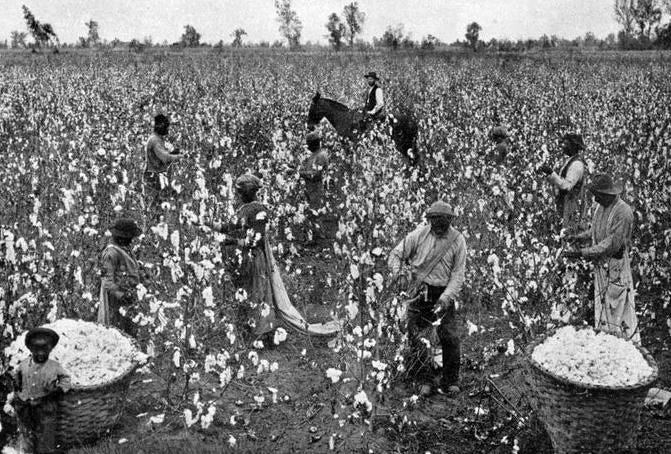
Labor Day was never simply a day off for me. I grew up in a household where my mother made sure I was thoroughly educated about Black American history. So even as a child, when America celebrated Labor Day, I wondered where Black people fit into the story. How could I think about labor in America without thinking about slavery? How could I think about workers demanding fair wages without thinking about the Black people who worked for generations without wages at all?
Today, I find myself asking an even more uncomfortable question: What does it mean for America to celebrate Labor Day while the debt for centuries of stolen Black labor remains unpaid and Black labor remains undervalued today?
Before there was a Labor Day, generations of enslaved Africans and their descendants were forced to toil on American soil. They planted and harvested cotton, sugar, tobacco and rice. They cooked and cleaned. They raised other people’s children. They worked as carpenters, blacksmiths, craftsmen and builders. Enslaved Black people even helped build the White House and U.S. Capitol. The federal government hired enslaved workers from their enslavers, who collected the wages generated by their labor.
Black people did the work. Someone else got paid.
America exploited the hell out of Black people because it understood the economic engine Black labor could produce. Black human beings were made into commodities precisely because our labor had value. Our labor had value when there were fields to harvest, sugar to process, clothes to wash and a nation’s capital to build. Yet America refused to place that same value on the Black people performing the work.
Then came emancipation. Freedom arrived. The paycheck never did.
The undervaluing of Black labor didn’t disappear with slavery. It took new forms. Black Americans entered an economic order shaped by sharecropping, debt peonage, convict leasing, Jim Crow and employment discrimination. Even as organized labor gained power, Black workers often faced discrimination and exclusion within the labor movement itself.
Discover Black history in our virtual galleries.
Comments Are Welcome
Note: We moderate submissions in order to create a space for meaningful dialogue, a space where museum visitors – adults and youth –– can exchange informed, thoughtful, and relevant comments that add value to our exhibits.
Racial slurs, personal attacks, obscenity, profanity, and SHOUTING do not meet the above standard. Such comments are posted in the exhibit Hateful Speech. Commercial promotions, impersonations, and incoherent comments likewise fail to meet our goals, so will not be posted. Submissions longer than 120 words will be shortened.
See our full Comments Policy here.