When Memphis went dark, community members brought the light: ‘We keep ourselves safe’
Share
Explore Our Galleries









Breaking News!
Today's news and culture by Black and other reporters in the Black and mainstream media.
Ways to Support ABHM?
Adria R Walker, The Guardian
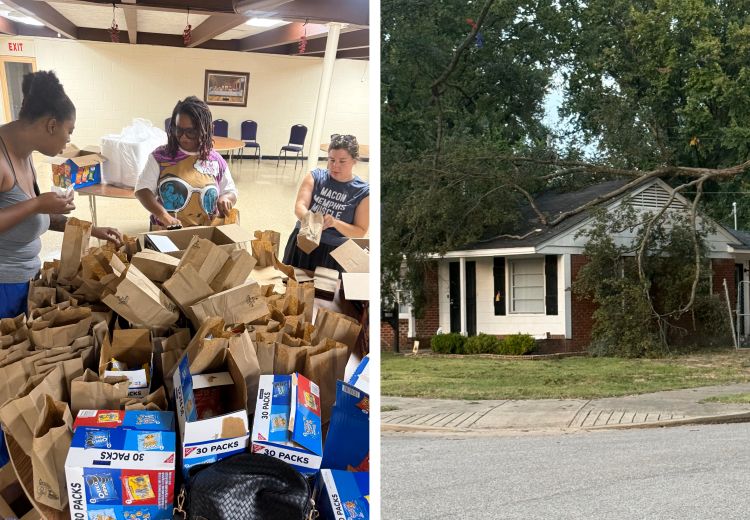
The storm that hit the Memphis, Tennessee, area on 22 August lingered for only about half an hour. But the destruction it left was lasting: $18m in damages, fallen trees and more than 100,000 people without power.
Amber Sherman was one of the east Memphis residents who lost power, but her first thoughts were of her neighbors. “My main thought was that the power’s going to be out for a while and people aren’t prepared for that and it’s very hot outside,” Sherman, a coordinator for Black Voters Matter (BVM) in Memphis, said. Days after the storm, a series of rain showers and thunderstorms known as a bow echo storm, the high in Memphis was 91F (32.8C). Tens of thousands of households were still without power.
As an organizer, Sherman knows how to connect with people. She contacted her boss at BVM, as well as other partner organizations, to talk about what relief efforts could look like. She checked on neighbors and helped with meal distributions. She also used her social media platform to update people on the situation.
“I think a lot of times, people outside of Memphis don’t know what’s happening here, and I thought it was really important because of what was happening in Gary, too,” Sherman said. Shortly before Memphis was without power, Gary, Indiana, a majority-Black city more than 500 miles to its north, lost power. Gary residents were without power for two weeks. Both storms came near the 21st anniversary of Hurricane Katrina, which prompted some people to draw comparisons between the majority-Black cities and what’s viewed as an inadequate governmental response. “Highlighting that this issue with infrastructure in Black cities is not a new problem, but a consistent problem that we really need to address.”
Learn more about the problem and how the community is facing it.
Read more about the power outages Black communites experience.
Comments Are Welcome
Note: We moderate submissions in order to create a space for meaningful dialogue, a space where museum visitors – adults and youth –– can exchange informed, thoughtful, and relevant comments that add value to our exhibits.
Racial slurs, personal attacks, obscenity, profanity, and SHOUTING do not meet the above standard. Such comments are posted in the exhibit Hateful Speech. Commercial promotions, impersonations, and incoherent comments likewise fail to meet our goals, so will not be posted. Submissions longer than 120 words will be shortened.
See our full Comments Policy here.