How an Air Force veteran discovered his new house was the seat of a plantation where his ancestors were enslaved
Share
Explore Our Galleries









Breaking News!
Today's news and culture by Black and other reporters in the Black and mainstream media.
Ways to Support ABHM?
Keith Zubrow, CBS News
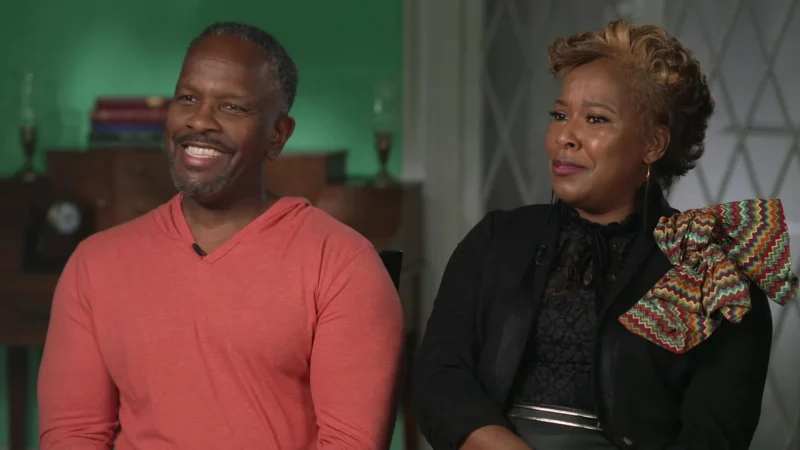
When Fred Miller, an Air Force veteran, purchased the white, Gothic Revival-style house with the green roof near his childhood home in southern Virginia, he wanted a large space to host gatherings for his close extended family. He was not expecting to unlock hidden chapters from his family’s past.
Miller did not know it at the time, but his new property was once a plantation. Named Sharswood, it was built in the 1850s by a slave-owning uncle and nephew who shared his last name.
“If I had known there was a ‘Miller Plantation,’ I maybe could have… put a connection with the last name Miller and that plantation,” Miller told 60 Minutes in 2022. “But I’d never heard of a ‘Miller Plantation’ or a ‘Miller’ anything.”
This Sunday on 60 Minutes, correspondent Lesley Stahl interviewed Fred Miller and members of his family at Sharswood, speaking about what they unearthed about the property and its past inhabitants.
Fred Miller’s sister Karen Dixon-Rexroth, who initially convinced her older brother to buy the property, and their cousins Dexter Miller and Sonya Womack-Miranda, did most of the research into Sharswood’s past.
“Something drew me to knowing the history of this place,” Dixon-Rexroth told Stahl. “I knew it was an old place from the 1800s, so I started from there, as far as looking at the previous owners, and also any records that were available online.”
With time and the help of Karice Luck-Brimmer, a local historian and genealogist, the Millers were able to uncover documents that proved that their own ancestors were once enslaved at Sharswood.
“Since the revelation… I know that when the slaves brought food into the main house, they came up through the basement stairs,” Fred Miller told 60 Minutes. “And there’s a distinct wear on the basement stairs from years and years of traffic, of people walking up those stairs, I’m thinking, ‘Wow, these are my people.'”
Keep reading this powerful story.
Sometimes people find skeletons in the closets of their family homes.
Comments Are Welcome
Note: We moderate submissions in order to create a space for meaningful dialogue, a space where museum visitors – adults and youth –– can exchange informed, thoughtful, and relevant comments that add value to our exhibits.
Racial slurs, personal attacks, obscenity, profanity, and SHOUTING do not meet the above standard. Such comments are posted in the exhibit Hateful Speech. Commercial promotions, impersonations, and incoherent comments likewise fail to meet our goals, so will not be posted. Submissions longer than 120 words will be shortened.
See our full Comments Policy here.