Met chief says ‘toxicity’ around DEI will not stop him recruiting more black and Asian officers
Share
Explore Our Galleries
Breaking News!
Today's news and culture by Black and other reporters in the Black and mainstream media.
Ways to Support ABHM?
Vikram Dodd, The Guardian
Mark Rowley says inclusivity is crucial for the force and he refuses to be ‘blown off course’ by critics
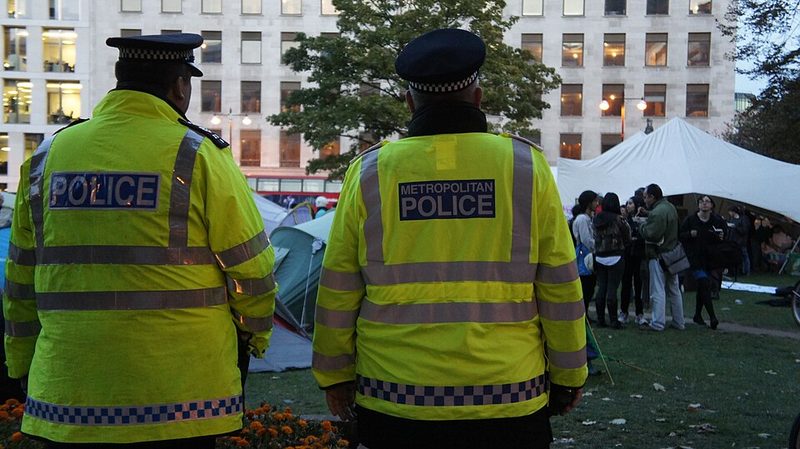
Mark Rowley has said the Metropolitan police must recruit more black and Asian officers in order to gain the trust of minority ethnic communities in London, and vowed not to be “blown off course by the culture wars”.
The right has criticised drives for diversity, claiming they lead to lower standards. Rowley, who is commissioner of the Met and Britain’s top police officer, said that as a leader of a major organisation he was prepared to take a stand against the “toxicity” surrounding the diversity debate and criticised other leaders for “running away from the subject”.
In London, 46% of people are from a minority ethnic background, compared with 18% of Met officers. Rowley said he was driven by operational necessity, not politics, and believed “inclusivity” was vital to policing by consent, which is the philosophical cornerstone of British policing.
“We cannot police London effectively if we fail to recruit from all of London,” he writes in the Guardian. “Effective policing depends upon inclusivity. If you are committed to policing by consent which stands or falls on the trust of all communities, you cannot do without it.”
He writes: “Today, we are launching a major recruitment campaign. We have no interest in the politics and ideologies of the culture wars. Inclusion is an operational necessity.
“We cannot be effective if large sections of society do not trust us, do not work with us or do not see policing as a service that understands their experiences. An inclusive workforce is not a public relations exercise. It makes us better at protecting victims, catching criminals and preventing crime.”
Read the full article here.
Consider reading about incarceration and the War on Drugs and how that affected Black Americans.
Comments Are Welcome
Note: We moderate submissions in order to create a space for meaningful dialogue, a space where museum visitors – adults and youth –– can exchange informed, thoughtful, and relevant comments that add value to our exhibits.
Racial slurs, personal attacks, obscenity, profanity, and SHOUTING do not meet the above standard. Such comments are posted in the exhibit Hateful Speech. Commercial promotions, impersonations, and incoherent comments likewise fail to meet our goals, so will not be posted. Submissions longer than 120 words will be shortened.
See our full Comments Policy here.