Reenacting Milwaukee history with AI reveals persistent racial bias in bringing the past to life
Share
Explore Our Galleries

Breaking News!
Today's news and culture by Black and other reporters in the Black and mainstream media.
Ways to Support ABHM?
Cora Yalbrin, Milwaukee Independent
Born into slavery in 1818, Gillespie bought his freedom, built a life in Milwaukee and became central to the legal fight that secured voting rights for Black men in Wisconsin. When he attempted to vote in Milwaukee in 1865, election officials refused to give him a ballot because he was Black.
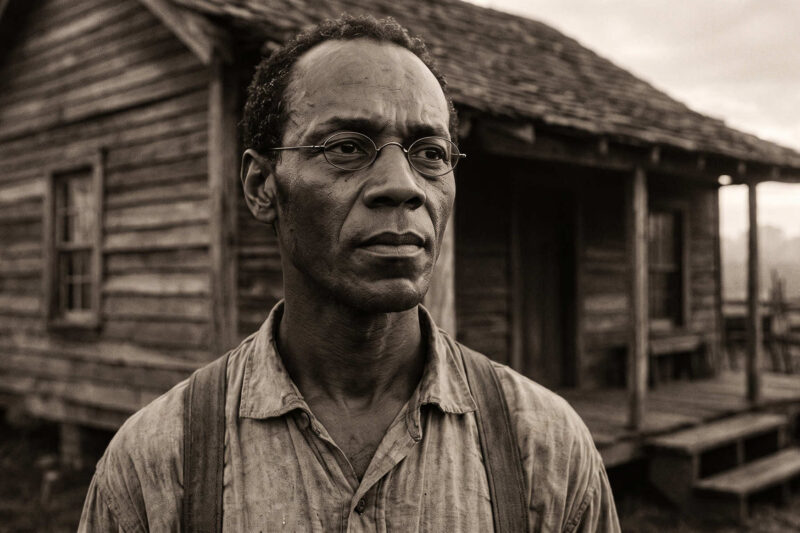
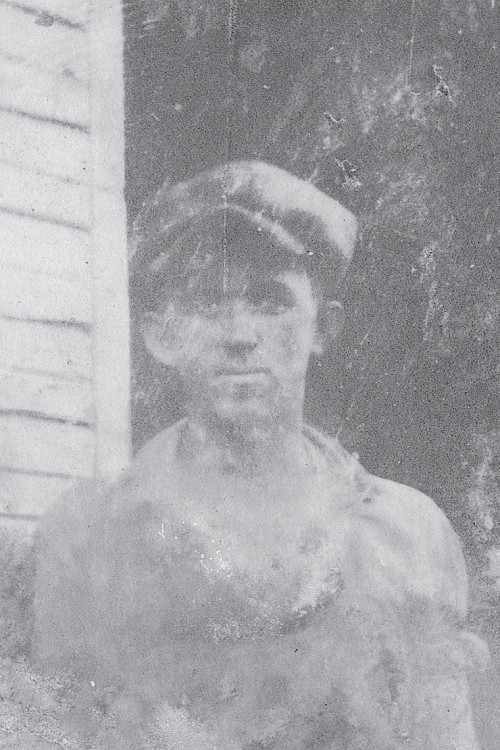
His challenge ultimately reached the Wisconsin Supreme Court, which ruled in Gillespie v. Palmer in 1866 that Black men had the right to vote in the state. Yet the surviving images connected to Gillespie offer little sense of the places, encounters and human moments surrounding those events.
The video project, “Reenacting Milwaukee History with AI,” was developed from earlier “Milwaukee Independent” technology experiments with still imagery. For this new evolution, archival photographs, maps, postcards, and historical research were used to explore how such undocumented scenes might have appeared.
The absence of photographs does not mean those moments have never been visually represented. Historical paintings, engravings, museum displays, television programs and dramatic films have long reconstructed events that no camera recorded.
Costumes are selected, rooms are designed, gestures are interpreted, and environments are assembled from surviving evidence. Even expensive historical productions routinely make creative decisions where records are incomplete, or compromises are required simply due to budget constraints.
Generative AI has the ability to change that production method and can create an unusually convincing illusion of photographic reality. But it does not eliminate the underlying problem.
See more topics throughout Milwaukee’s history.
Comments Are Welcome
Note: We moderate submissions in order to create a space for meaningful dialogue, a space where museum visitors – adults and youth –– can exchange informed, thoughtful, and relevant comments that add value to our exhibits.
Racial slurs, personal attacks, obscenity, profanity, and SHOUTING do not meet the above standard. Such comments are posted in the exhibit Hateful Speech. Commercial promotions, impersonations, and incoherent comments likewise fail to meet our goals, so will not be posted. Submissions longer than 120 words will be shortened.
See our full Comments Policy here.