Harvesting Cotton-Field Capitalism
Share
Explore Our Galleries









Breaking News!
Today's news and culture by Black and other reporters in the Black and mainstream media.
Ways to Support ABHM?
By
Edward Baptist’s New Book Follows the Money on Slavery

“Have you been happier in slavery or free?” a young Works Project Administration interviewer in 1937 asked Lorenzo Ivy, a former slave, in Danville, Va. Ivy responded with a memory of seeing chained African-Americans marching farther South to be sold.
“Truly, son, the half has never been told,” he said.
This anecdote is how Edward E. Baptist opens “The Half Has Never Been Told: Slavery and the Making of American Capitalism,” an examination of both the economic innovations that grew out of the ever-shifting institution of slavery and the suffering of generations of people who were bought and sold.
Mr. Baptist, a history professor at Cornell, said in an interview that his book represented his decade-long effort to blend these two aspects. Published in September, “The Half” joins a new wave of scholarship about the centrality of slavery — and the cotton picked by slaves — to the country’s economic development.

Mr. Baptist shows the ways that new financial products, bonds that used enslaved people as collateral and were sold to bondholders in this country and abroad, enriched investors worldwide. He also emphasizes viciously enforced slave labor and migration. The cotton boom led planters to sell slaves — one million moved from old to new slave states from the 1790s to the 1860s. Productivity, he argues, came through punishment….
As he writes in the book: “The idea that the commodification and suffering and forced labor of African-Americans is what made the United States powerful and rich is not an idea that people necessarily are happy to hear. Yet it is the truth.”
Suresh Naidu, a Columbia University economist who also studies slavery, said economists would call for even more quantitative evidence for Mr. Baptist’s arguments but said his book was a “great interpretation of slavery.” Economic historians have tended to focus on how market forces blunted the worst aspects of slavery, Mr. Naidu said, but Mr. Baptist demonstrates how the drive for profit exacerbated physical punishment and forced migration.
[…]
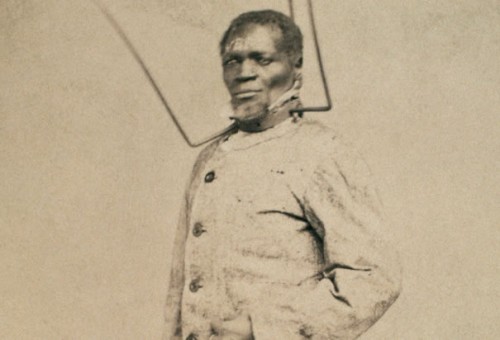
His own journey into that past was intellectually satisfying but sometimes emotionally challenging, Mr. Baptist said. He recalled reading an interview with a woman whose enslaved mother toiled in the fields of a small Kentucky farm in the 1850s, sometimes returning home to discover that another child of hers had been sold away.
“In 1850, people could have given up,” Mr. Baptist said. “There was no reason to expect this would end anytime soon. That was a moment, reading that interview, that brought home all the implications of the history.”
Read the full article here.
Learn more about enslavement.
Read more Breaking News here.
Comments Are Welcome
Note: We moderate submissions in order to create a space for meaningful dialogue, a space where museum visitors – adults and youth –– can exchange informed, thoughtful, and relevant comments that add value to our exhibits.
Racial slurs, personal attacks, obscenity, profanity, and SHOUTING do not meet the above standard. Such comments are posted in the exhibit Hateful Speech. Commercial promotions, impersonations, and incoherent comments likewise fail to meet our goals, so will not be posted. Submissions longer than 120 words will be shortened.
See our full Comments Policy here.